



With all the full length reviews of late it's been a while since we had a good old fashioned Review Rundown.
This time around it's a real grab bag: horror, cats, reworked Shakespeare, family friendly video installation art. L.A., Tokyo, NYC, London.
Come with us as we get a telephoto snapshot of the immersive cosmos today.
NoPro is 100% reader & listener supported. Support our work by becoming a subscriber, which comes with access to our newsletter & Discord, or drop a one-time gift in the Tip Jar of any amount to share your love of immersive experiences.
Want more? Check out our REVIEWS section.
Check out our How To Get Covered By NoPro guide to submit your events & experiences for review. Want the opportunity to get your work listed in our newsletter & socials? Submit a listing to Everything Immersive.
The Colour Monster Goes To School (London)
FRAMELESS
Starting at £21.50, Marble Arch, run concluded.
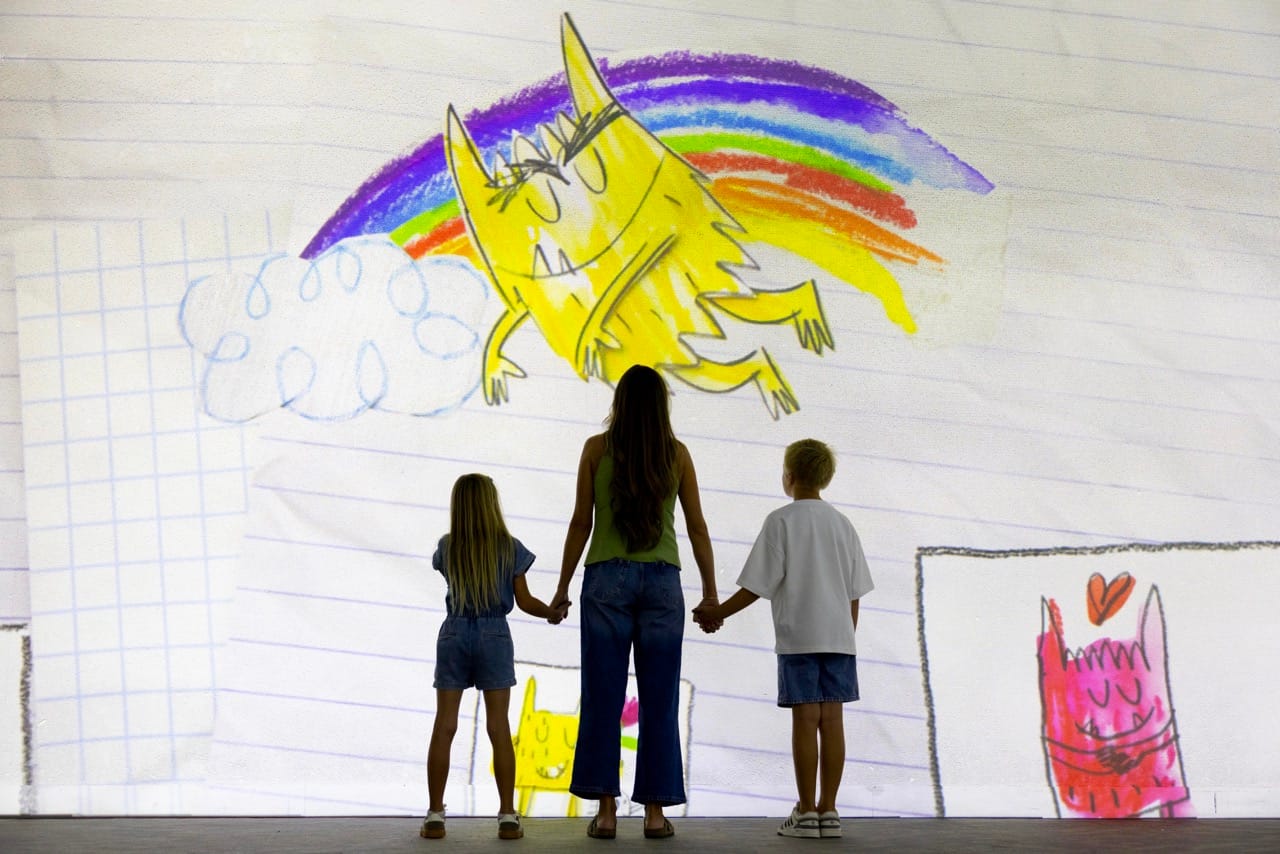
Anna Llenas’ residency at FRAMELESS this summer provides a touchpoint for the littlest artists amongst us to onboard into the world of gallery display. A loop of full-four-wall projections tell the story of the Colour Monster’s first forays into going to school — the same journey the target audience of 3-7 year olds is about to embark on —while also providing a chance for the kids to contribute their own offering to the story: each child is invited to color in their own Monster on a piece of paper which is then scanned and incorporated into the projection.
Colour Monster is a short onboarding experience at only ten minutes’ worth of show (then again, five year olds are difficult to keep engaged for much longer) but the ticket to FRAMELESS grants access to the three other galleries which rotate through displays on longer loops. All the rooms offer 360-degree projections on different themes with some viewer participation: our visit to Colour In Motion was spent comfortably sitting along the wall while we watched others happily swirling across the floor sending flecks of motion-tracked paint up the walls to create famous artworks. Even the entry journey to the venue was charming: a snaking hallway of colorful projections & mirrors as we traveled underground via escalators, removing us from the bustle of Oxford Street and into the mindset to engage.
Extremely flexi-family-friendly (entry any time, open wandering through looping exhibits) and easily accessible, FRAMELESS follows the rising London trend in 360-degree projection and is an active way to engage that much more with the art we consume.
— Shelley Snyder, London & UK Curator
Cry Havoc (New York City)
Mad Composition Co
$30; 153 Morgan Ave, Brooklyn; Aug 27 - Sep. 19, 2026
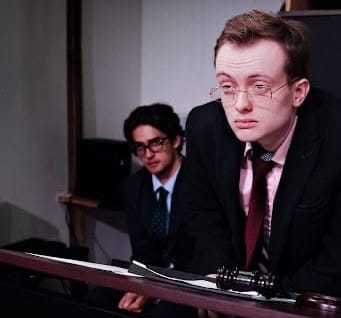
Cry Havoc is an adaptation of Shakespeare’s Julius Caesar by new college collective, Mad Composition Co. The production features largely rewritten language with modern day audiences in mind, while maintaining the same story as the original. The world is set 17 years into the future (2043) and places the characters in a version of today’s United States Senate. Audience members are cast as senators and have the power to vote during a few motions in the first act with audience’s real last names or chosen aliases being called aloud to prompt the vote. Cast members tally the votes and I assume the following scene is determined by the outcome. While this mechanism is interesting and appropriate for the story, in practice it is poorly crafted. Audience senate members do make a handful of official votes, but by the second act the conceit is abandoned. It is also unclear when the audience members are senate who are actually present vs. a more traditional fourth wall role since the show flits between the senate floor, personal residences, and other assumed private spaces.
In general, there seems to be a lack of care for the audience in the piece. From a physical standpoint, audience members are squeezed onto small, uncomfortable benches for the 2.5 hour piece and the space is a petite, windowless room which begged for ventilation in early September in NYC. Performers are ultra close to audience, which isn’t a bad thing in and of itself, but in such a small space, I felt like I was in the way of performers as they accessed an area of the set directly next to my seat. The production also included blood spatter which did reach audience members; the cast told us after bows “it washes out.” The piece does not seem to be designed with audience care or access in mind from the ground up, and sacrifices are made for the artistic vision at the audience’s expense.
From a creative standpoint, the world of the play is interesting but unclear and many choices don’t add anything important to the story or feel self gratuitous and unjustified, which left me confused about why they were necessary. I really wanted to dive deeply into the twisted world of Rome, USA in 2043 and see what was different, but it turned out that not much has changed at all. The production runtime is essentially the full duration of the original script, which seems like a missed opportunity to remedy one of the main pain points of Shakespeare’s work for modern audiences. The participatory mechanism is surface level and, regardless of whether the vote triggers a different scene, at the end of the day it is still Julius Caesar, so I can’t help but wonder why have us vote at all if JC will ultimately die anyway. While perhaps this serves an intended moral of the story, that our voices don’t matter under a neoliberal, fascist regime, it detracts from the production as a piece of participatory work by creating a sense of false agency. There seems to be a level of follow through missing in the artistic choices that ultimately adds to the feeling that the audience is an afterthought for the production.
All that said, Mad Composition Co is a fresh company with a lot of love for the craft which brings a beautiful energy to the work, and what they have accomplished with Cry Havoc is ambitious and admirable. It does read more university black box than NYC indie theatre, but what they lack in professionalism and experience is met with even more heart and drive. As a professor, if these were my students I would tell them to keep trying new, interesting things and build up from here, to continue learning and growing. A few concrete suggestions: I would love to see them try a piece with roles that feels on point for their age range, focus on doing less things more thoroughly, and to lean into creating something directly from the heart. They clearly have the creative chops to self generate and they have a lot of important things they want to say at the heart of the work, so let us see it beat onstage.
— Allie Marotta, NYC Curator
Nekomachi/Cat Town (Tokyo)
DaisyDoze
¥4,500 - ¥5,000; Shimokitazawa Station; Sep. 19 - Oct. 4, 2026
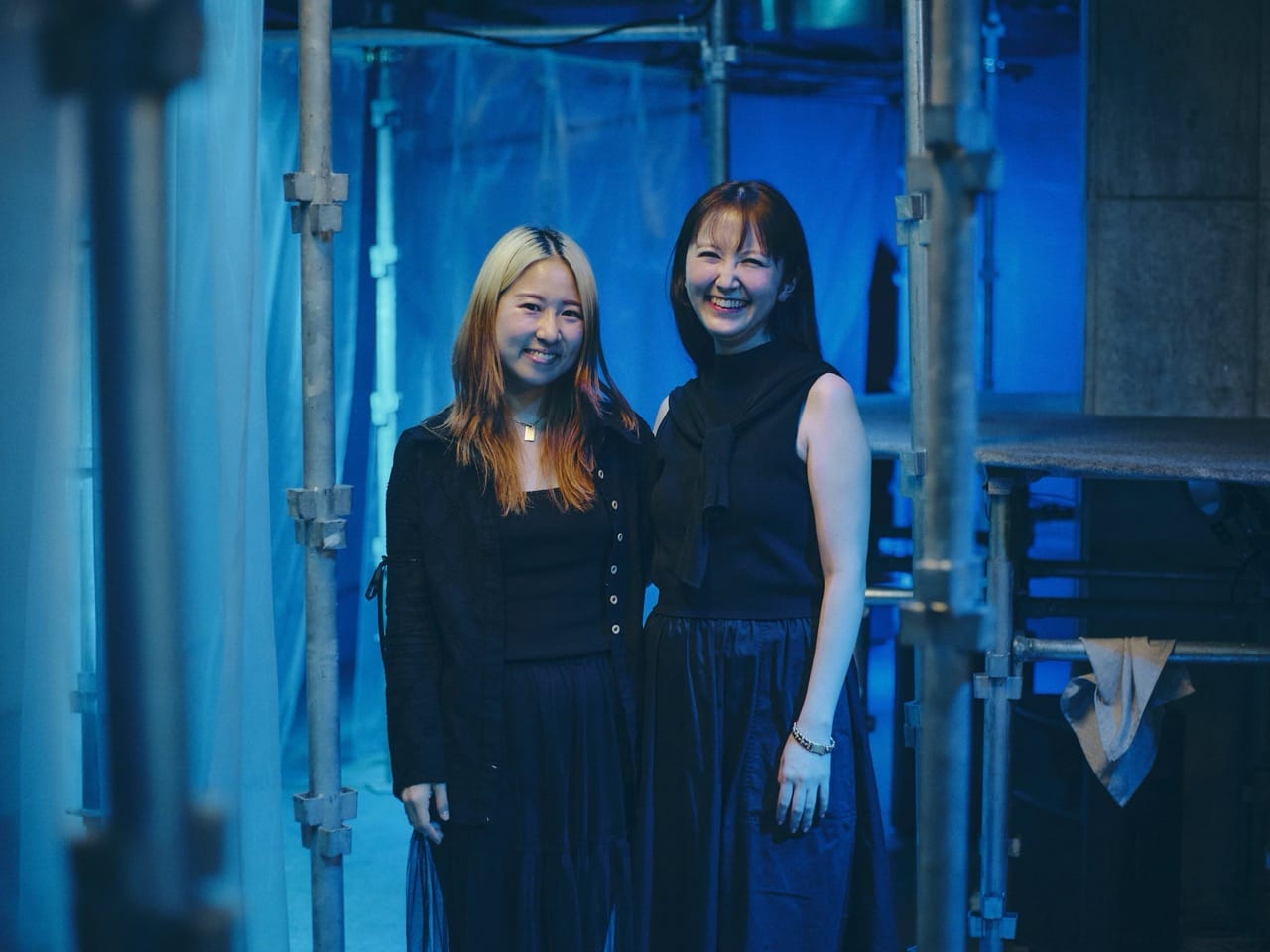
DaisyDoze brought their acclaimed immersive liminal walking tour back to Shimokitazawa Moon Art Night, this time with a fully realized English version, two full casts, and a denouement that delivered one of the most delightful returns to the ordinary that I’ve ever experienced.
I’ve been a fan of DaisyDoze’s mesmerizing, site-specific approach to theatrical storytelling ever since I had the honor of reviewing Dancing In The Nightmare, their trippy, synergetic collaboration with the BnA Wall Art Hotel, itself a living, ever-evolving monument to collaborative art. Seamlessly blending the otherworldly atmospheres of the hotel with the classic folktale Urashima Taro, a dollop of Jung, and many other diverse influences, the show blew my mind with its mesmerizing, personalized, and artfully fragmented approach, evoking profound emotional imagery with atmosphere, psychological tricks, and outstanding physical performances augmented with sparse, poetic printed text.
I was so impressed with the piece that I was nervous to see if the fledgling company could top it.
Then, in 2025, I got to witness their first iteration of Nekomachi – Cat Town. Inspired by the works of Sakutaro Hagiwara, the innovative Japanese poet who, a century ago, wandered the same streets that form the locus of the story, capturing their atmosphere in haunting prose. I was impressed again. Maintaining their core ethos of highly localized, non-verbal performance elements in the service of total immersion, they wove a completely different kind of spell, this time incorporating immersive audio storytelling to guide the experiencer along the physical route, using 3-D soundscaped narration to evoke a world hidden to the ordinary senses.
In that first version, even though English support was lacking, the experience felt complete. This year’s (2026) upgrade demonstrated DaiseyDoze’s commitment to constant improvement by creating an even more profound experience.
Setting off from Shimokitazawa station, we were guided by the disembodied voice of the poet, delivered with delicate and evocative power by the stage actor Masanari Sasaki. The walking tour guided us away from the bustling street festival along winding streets rich with history, to landmarks and locations where, little by little, we were drawn into a world inhabited by the spirits of cats, embodied by a troupe of some of Tokyo’s top dancers supplementing the audio guidance, weaving a subtle, silent spell that drew us deep into an otherworldly dream. The show culminated in a literal liminal space, not usually open to the public, where we witnessed and were invited into an organic,
rhythmic ritual before being returned to the waking world in a masterfully realized architectural metaphor.
I have tried to avoid spoilers here in the hope that this experience will return in the future, but regardless, if you ever have the chance to attend a DaisyDoze event, I can not recommend it highly enough.
–Benjamin Beardsley, Tokyo Correspondent
Urban Death Tour of Terror Ultra 2026 (North Hollywood)
Zombie Joe's Underground Theatre Group
$24; 4850 Lankershim; Oct. 9 - Nov. 1, 2026
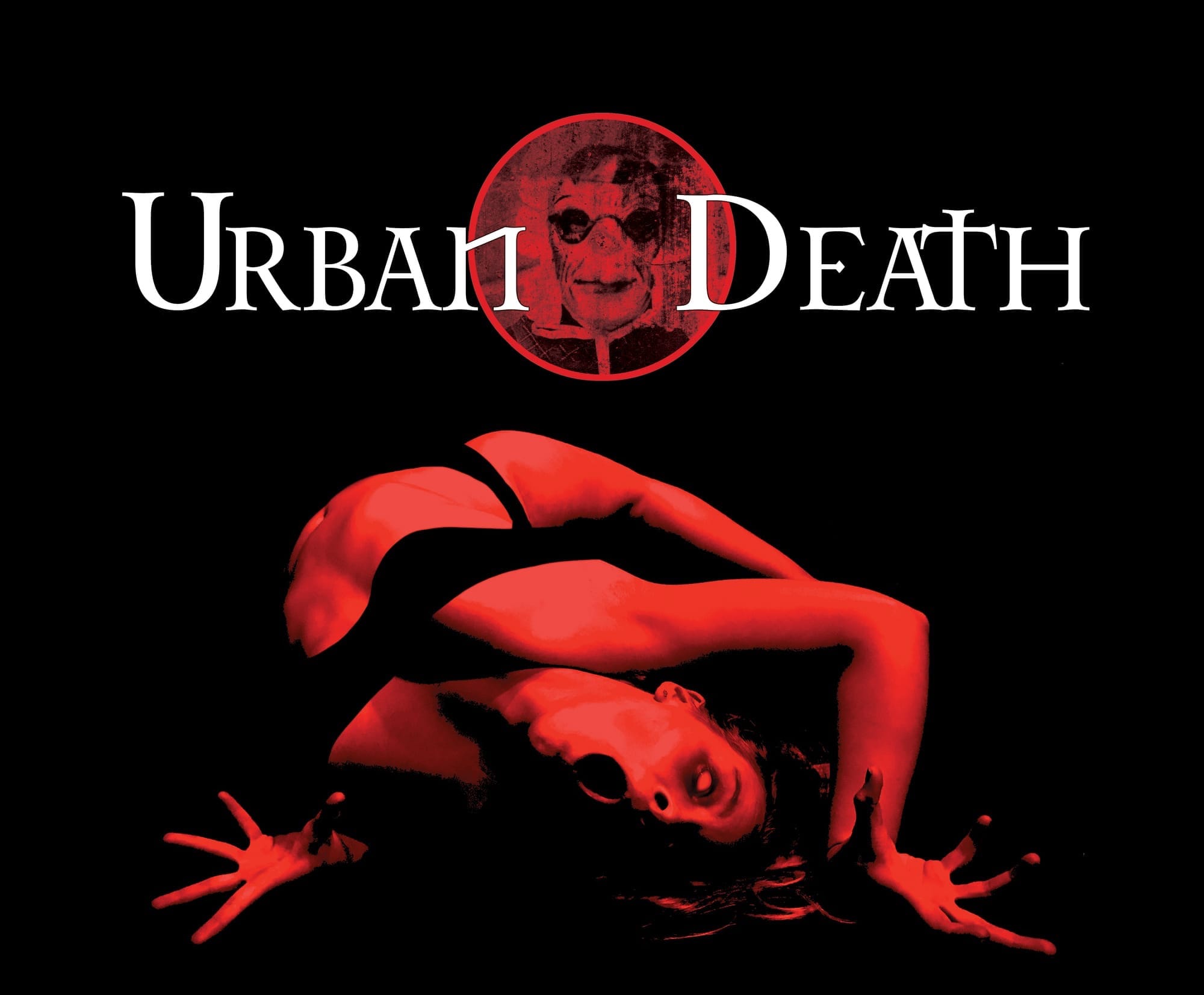
It has been a few years since I took in a show at Zombie Joe’s, the North Hollywood mainstay whose space is synonymous with horror grotesqueries. That’s not an insult: the Underground Theatre Group’s speciality is violence, nudity, and combinations thereof all calibrated to shock normies and delight the horror sickos.
Being neither normal nor a horror sicko — more of a art theatre freak née geek, really — my earliest encounters with the work of the theater, especially its signature show Urban Death, left me fascinated by the designed to disturb stage pictures that the rotating cast of players at the theater would assemble.
Of course, that was a decade ago, back before I had my limits mapped out and there was a thrill to having boundaries pushed. It was also before a decade of personal loss, a global pandemic, and the cavlacade of horror that parades through our social media feeds 24/7.
So you know what it is: ZJU’s Urban Death is a short, Grand Guignol inspired show that features a rapid fire series of vignettes of horror scenarios both gross and sublime. Sometimes even in the same vignette. The Tour of Terror variant features a short horror maze both before and after the show, which carries on the grotesque theme.
There isn’t really a story. In fact there isn’t really a sense of progression or rising tension of any kind. One scene might be a surreal moment where a monster gives birth to two fully naked adults, covered in grime and some gore. Is that God? Are they Adam and Eve? It doesn’t matter. On to the next, which could be a guy trying to take a shit, struggling to find toilet paper and get back on the perch he was squatting on, his ass hanging out. One played to disturb. The next for laughs. Then it’s a black woman under police lights. Or an unhoused person freezing to death on a bench. Stark visions of real life horrors that earn the moniker "Urban Death." And now: zombies.
In short: it’s horror performance art. With large portions of nudity and bursts of sexual violence whose primary target are male bodies. Leavened with what could be called "terror clowning" and the occasional brief glimpse of something truly other.
After years away the show reminded me most of doomscrolling. The short bursts of horrible scenes. The inability to stop what is in front of us. The numbing effect of that combo. If the aim of the work is to shock I’m afraid I, like much of America, have lost that organ.
The NoPro angle to all this is the haunt on either side, and while the first few times I went through the Tour of Terror I came away impressed with how disturbing and seemingly endless the maze was in such a small space this time it just didn’t phase me. Maybe I’ve just done too much of this stuff now. Maybe this was an off year. I honestly can’t tell.
The ZJU team knows that what they’re making is more of the same, the director said as much as I walked through the door, and so fans of the form will be satisfied — as the hoots and cheers of the opening night audience attest — but if the thrill of such things has left you or never had it in the first place there’s not much else on offer. For my tastes I could have used more of the etherial weirdness that occasionally makes into the rotation of the vignettes and more of a sense of dread in the maze. Yet I don't think that's what the core constituency for Urban Death wants, so I don't expect the long running show to change much.
–Noah J. Nelson, Publisher
Discover the latest immersive events, festivals, workshops, and more at our new site EVERYTHING IMMERSIVE, home of NoPro’s show listings.
NoPro is a labor of love made possible by our backers. Join them today and get access to our Newsletter and Discord!
In addition to the No Proscenium website and our podcast, and you can find NoPro on Bluesky, Facebook, LinkedIn, YouTube, Instagram, and in the Facebook community also named Everything Immersive.


Discussion