



Eric Einhorn, co-founder of On Site Opera, discusses the upcoming ‘Amahl and the Night Visitors’
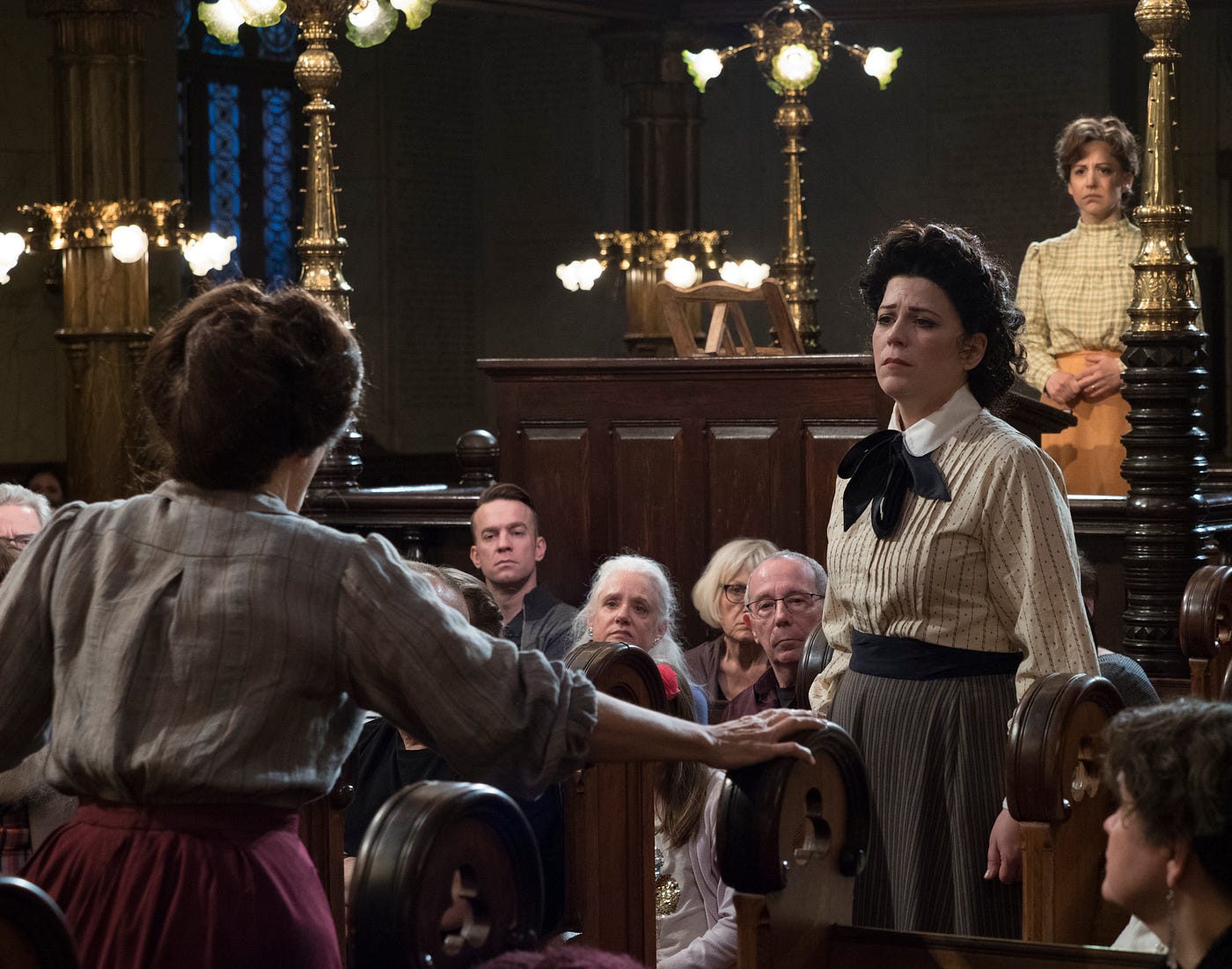
On Site Opera produces site-specific operas in non-traditional venues throughout New York City, everywhere from zoos to synagogues to museums to crypts; part of their mission is to collaborate with local organizations to reach new audiences who may not have seen an opera otherwise.
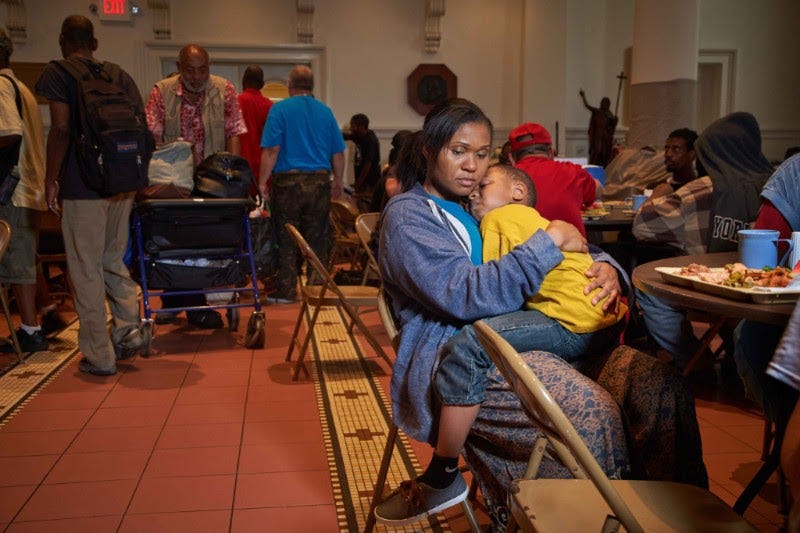
For their newest production, they’re bringing Gian Carlo Menotti’s Amahl and the Night Visitors to life at the Holy Apostles Soup Kitchen in Manhattan just in time for the holiday season.
We caught up with Eric Einhorn, co-founder and Artistic and General Director of On Site Opera, about this very special seasonal show over email.
No Proscenium (NP): For someone who isn’t familiar with your company, what is On Site Opera and what is the organization’s mission?
Eric Einhorn (EE): Founded in 2012, On Site Opera (OSO) produces site-specific operas in non-traditional venues throughout New York City (and beyond!). By staging each opera in an environment specific to the piece, OSO surrounds the audience and artists in the music and drama of the story, amplifying the connection between the world of the opera and the reality of the audience.
NP: Why choose to present opera in a site-specific fashion? What drew you to this format?
EE: When deciding what kind of opera company I wanted to add to the robust NYC opera landscape, I asked myself the same questions I would ask if I was directing a new production of a standard opera: What is my point of view? What do I have to say about this piece (or art form) that isn’t being said? How can audiences be engaged in new and exciting ways? Those questions, combined with a growing trend in regional opera to produce second stage pieces in non-traditional spaces, lead me to site-specific opera.
The idea of creating intimate, immersive, site-specific productions was immediately exciting, not only from an artistic standpoint, but from a sustainability/budgetary one as well. The potential that site-specific opera created seemed limitless, especially in forging a deeper connection between audience, artist, music, and drama. While some companies had been programming operas in non-traditional spaces, there was not a company in the U.S. whose mission was solely based around site-specific production.
With the creation of On Site Opera, I set out to see if a purely site-specific opera company was sustainable…turns out it is and audiences are really drawn to it!
NP: What are some of the unusual places where you’ve staged performances?
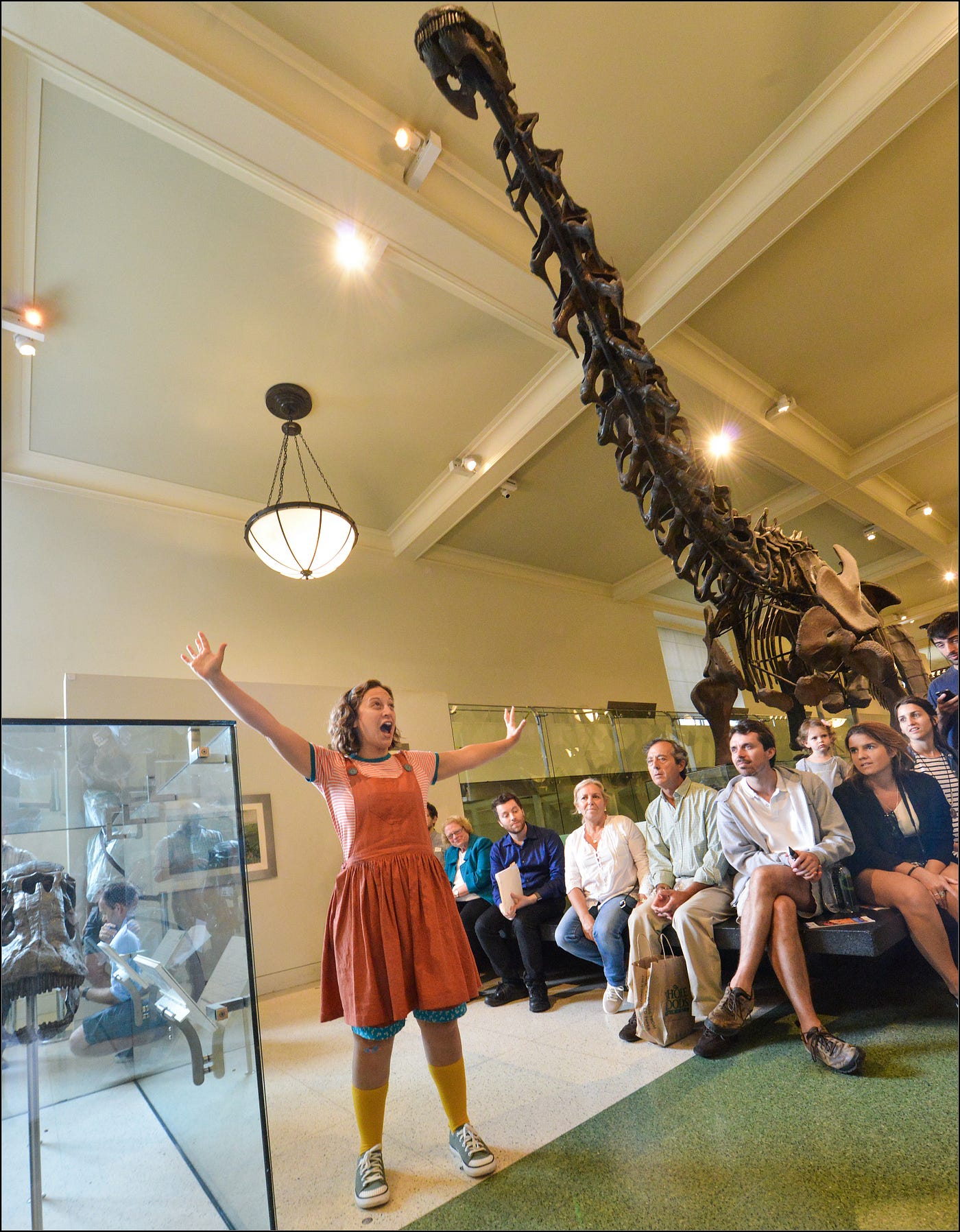
EE: It’s hard to say what has been “unusual” for us, since there really isn’t a “usual.” Every production is designed to match a piece with a space, so we’re always exploring all kinds of venues. Our inaugural production took place in an outdoor amphitheater at the Bronx Zoo (a little too close to the camel enclosure for the new baby camel’s liking). We’ve produced shows in the dinosaur hall of the American Museum of Natural History, Harlem’s Cotton Club, Madame Tussauds wax museum, a crypt at the Greenwood Cemetery, an historic Lower East Side synagogue, the Atlanta Botanical Gardens, and several historic houses throughout the city.
NP: How did the Amahl and the Night Visitors project come about?
Get Kathryn Yu’s stories in your inbox
Join Medium for free to get updates from this writer.
SubscribeSubscribe
EE: I have loved Amahl since I sang in a local production as teenager in New Jersey. It was a piece that I had wanted to consider for OSO, but couldn’t crack the question that comes up with every OSO piece: where can we perform this? Taken literally, Amahl is a story set in ancient Israel, more specifically in the hut of Amahl and his Mother. The literal setting offered very little in terms of a modern NYC venue suggestion. An On Site board member also suggested that we produce Amahl, pushing me work harder to crack the venue question.
After much reflection on the piece and its messages of community, selflessness, and generosity even in the face of poverty lead me to a place of modern generosity and community: the soup kitchen.
NP: Why choose to stage Amahl and the Night Visitors in a real-life soup kitchen?
EE: In exploring a way to present this piece in a New York City location, I focused on the message of the piece. At its core, “Amahl” is a piece about generosity and selflessness, regardless of one’s situation. The impoverished, disabled Amahl’s selfless act of giving his crutch to the Christ Child demonstrates that, no matter how dire our own situation, there is always an opportunity for kindness and generosity. Amahl and his Mother are extremely poor, with little food and unstable housing. I wanted to find a space where people like Amahl and his Mother might exist in a contemporary NYC setting. This search lead me to a soup kitchen. The idea of creating this opera in a community space that feeds the population that Amahl and his Mother would belong to became an anchor for the production.
Solidifying the type of venue we produce in lead to the development of another layer of the production concept, one that will flip part of the original story around a bit. In the original, the Three Magi, with all of their finery and gifts for Jesus, take shelter at Amahl’s house on their way to Bethlehem. To me, the opera’s message of generosity could resonate even further in our contemporary context if Amahl’s selflessness was directed towards people in a more difficult situation than him, rather than towards wealthier people (the Kings). To that end, the Three Kings in this production will come from the world of the street homeless. They visit the soup kitchen in the hopes of seeking shelter for the night. By welcoming them in, Amahl and his Mother begin their journey of charity and kindness in a more profound way than in the original setting.
NP: How is the community incorporated into the work? How are you designing around audience agency?
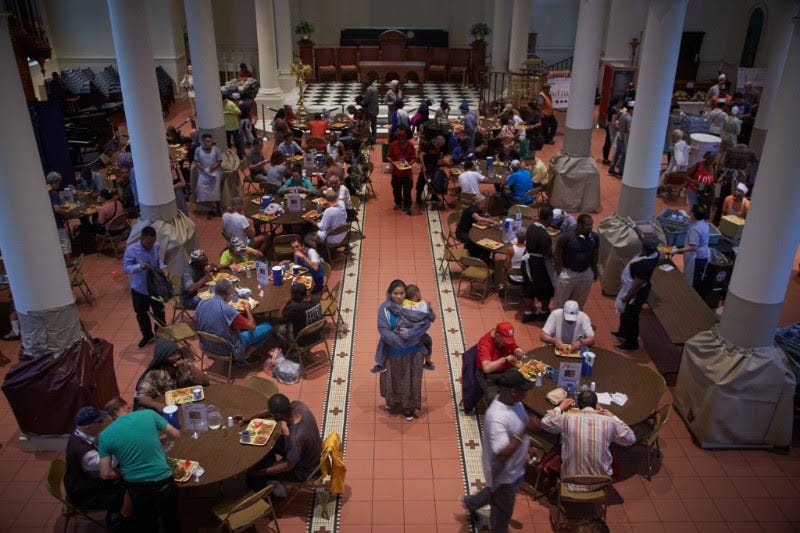
EE: In order to create a modern telling of this opera that involves the most vulnerable members of our community, I wanted to actually get members of that community involved. I didn’t want this to be a story about certain people, I wanted it to be a story with certain people. Through a member of our board of directors, we were connected with Breaking Ground, the city’s largest provider of supportive housing. Through a partnership with Breaking Ground, we have created a community chorus (all of whom have experienced homeless or housing vulnerability) to be the actual members of community in the narrative of the opera.
The audience will also be incorporated into the production as the “community.” Tickets to the production are free (as part of On Site Opera’s “Opera Free-For-All” initiative). In lieu of ticket fees, we are asking audience members to bring a food donation. These donations will be featured in the production as the gifts the community gives to the Three Kings.
Following the production, the food will be donated to the Holy Apostles Soup Kitchen where the production takes place.
NP: What do you hope people take away from the experience?
EE: A hallmark of On Site Opera’s productions is the connection between story and place. We carefully match the opera we are producing with the space in which we perform it in order to create a deep and enriching experience for the audience and our artists. By experiencing this opera in a real soup kitchen, a place that feeds hundreds of the city’s most vulnerable every week, audiences will have the opportunity to connect with the story and the music in a way that only site-specific performance allows. By creating this experience and incorporating actual performers from the homeless community, it is my hope that audiences will walk away feeling more connected to the entire NYC community, even those that were previously on the fringes of their awareness.
Site-specific opera has the power to connect people through the shared experience of music-making. This production, with all of its community connections, has that potential even more than usual. The message of this opera is universal, and this production has the power to show us all that generosity has nothing to do with how much money you have, but how much kindness you have.
Amahl and the Night Visitors will take place at the Holy Apostle Soup Kitchen in Manhattan on December 6–8. Tickets are currently sold out but a waitlist is available.
NoPro is a labor of love made possible by our generous Patreon backers. Join them today!
This month we’d also like to thank The Johnny Carson Center for Emerging Media Arts for sponsoring our features.
In addition to the No Proscenium web site, our podcast, and our newsletters, you can find NoPro on Twitter, Facebook, YouTube, Instagram, in the Facebook community Everything Immersive, and on our Slack forum.


Discussion