



My journey to Southwark in southeast London feels more like a visit to an old friend rather than an outing to the theatre. My last visit to the CoLab Factory was almost a year ago and — much like how the passage of time etches new wrinkles into a familiar face — the facade of the building hasn’t gotten any prettier in spite of its two long-term tenants. Both The Great Gatsby and For King And Country have been occupying the premises continually since at least 2018 enjoying ongoing runs, but it seems that neither they nor their host Colab Theatre are interested in overly announcing their presence to the neighborhood.
A young woman in a crisply starched shirt and a pencil skirt awaits me at the front door this time, so I don’t accidentally end up mixed in with any Gatsby attendees the way I did last year. She addresses me pleasantly but as she speaks, she slips a small card into my palm. A furtive glance down informs me that I must watch what I say as we may be under surveillance. As I enter the reception area, I am greeted by a looming and careworn reverend who welcomes me to the evening’s meeting of the London Fascist Party. I have a look around the bar and feel my innards sink.
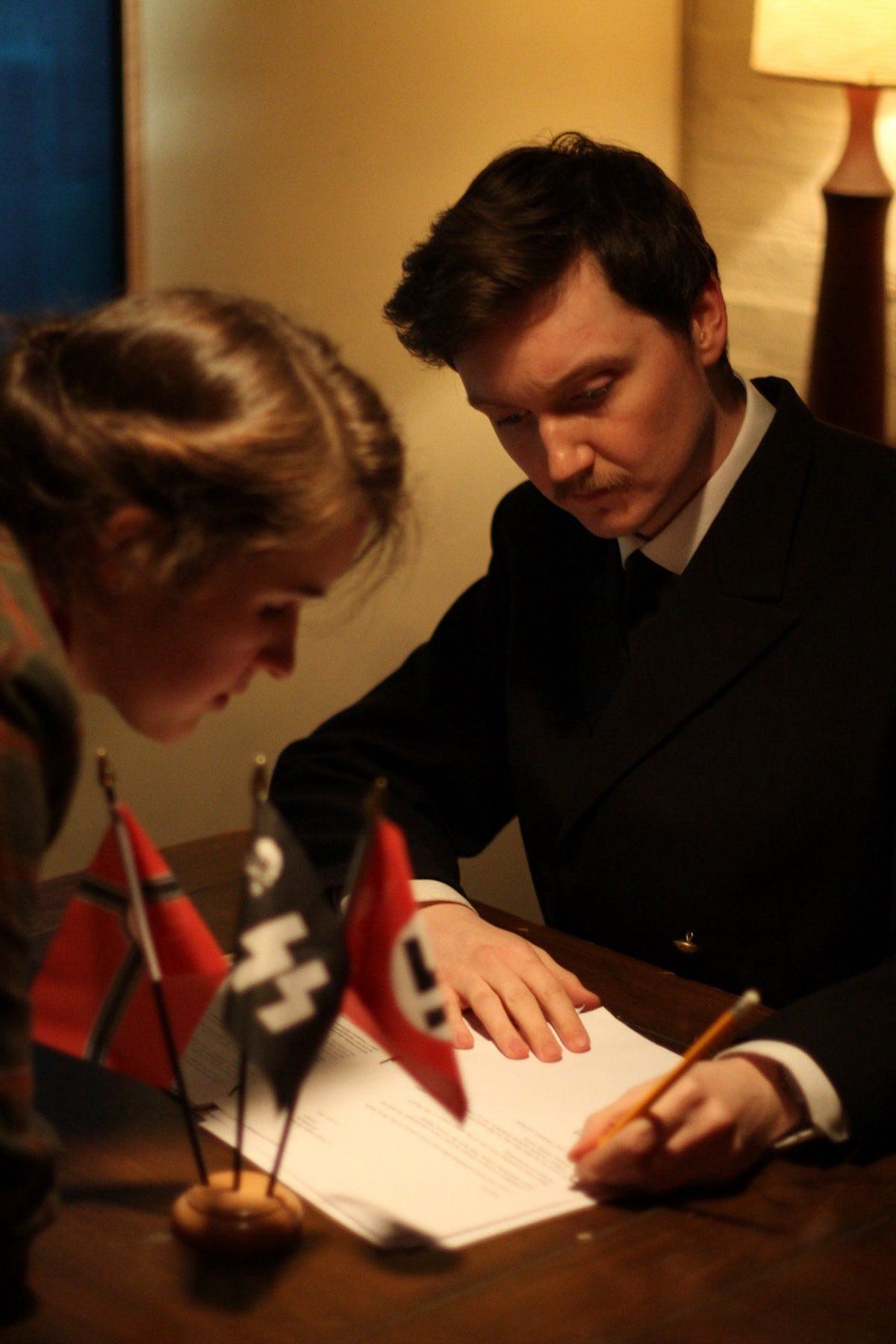
The bar is festooned in enough Nazi paraphernalia to get a social media account blacklisted. (Clearly things haven’t gone well for the Allies since last I saw them.) The original For King and Country show (co-produced by Parabolic Theatre and the Bedouin Shakespeare Company) which I visited last year has since been rebranded as For King & Country: 1940; the new show by the same company runs concurrently and is a direct sequel based in 1944 — adapted to reflect the decisions made by the previous For King & Country: 1940 audience. If in-game resources were sent abroad, or someone is poisoned, or a bomb has gone off in 1940, the fallout happens in For King & Country: 1944.
To warm us up for an evening of interacting and engaging with our peers, our reverend host (Ed Cartwright as Reverend William Sinclair) encourages us to take part in the pro-Axis pub quiz that’s going on. One of the other hosts slips me a blank identity card and urges me to forge it in case an inspector comes around; I catch a few of my fellow attendees following through in between sips of beer or prosecco. An apology is made for the raucous party sounds that occasionally intrude through the wall from their “Italian fascist supremacist neighbors” who are throwing a support party (a clever cover story for the fact that Gatsby is going on just next door).
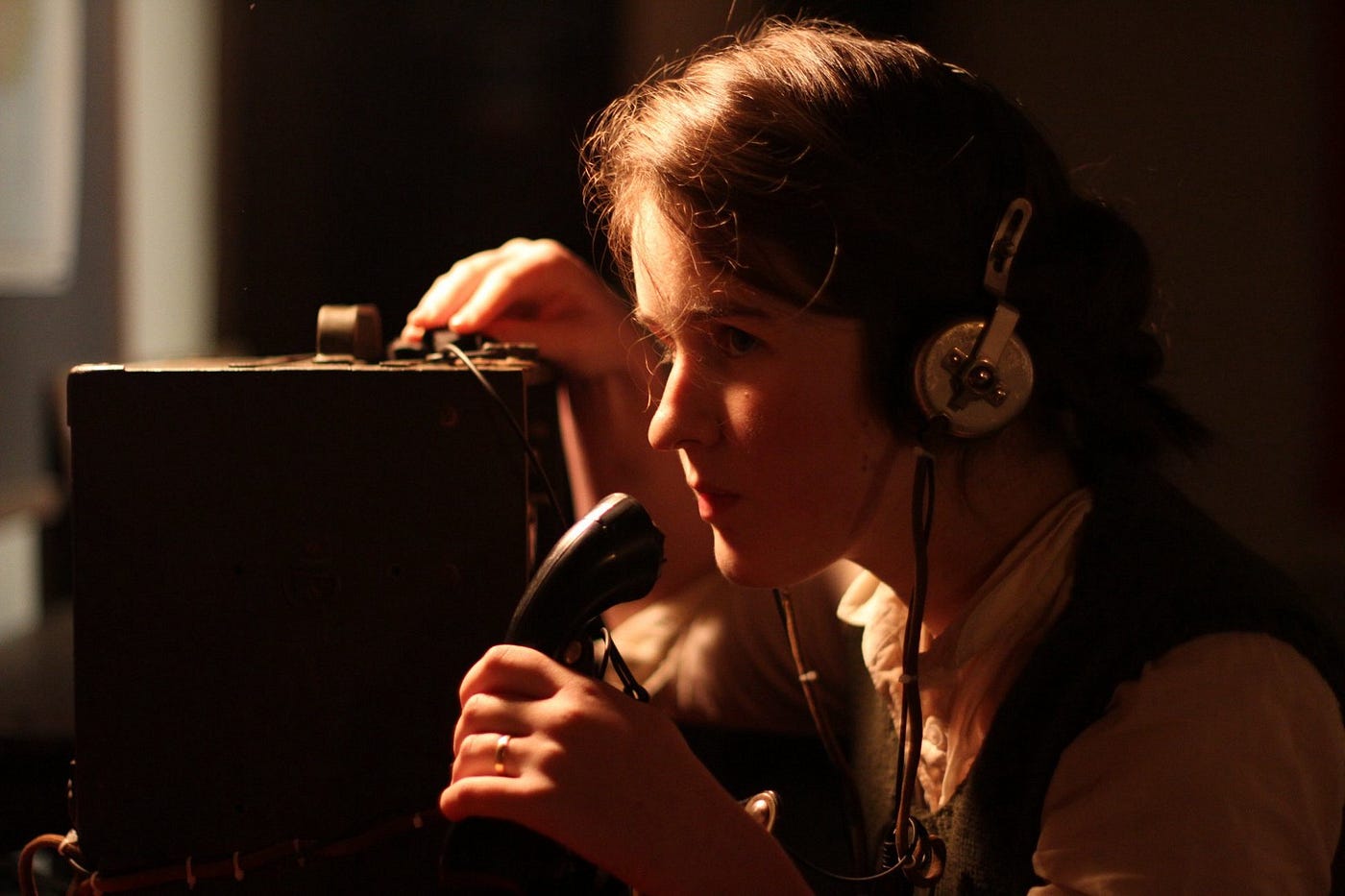
I am relieved when the reveal comes that this gathering is not for a Nazi support party, but is actually for an Allied rebellion effort. We assist breaking into the basement bunker: it’s the same set as 1940, only four years in the future, and showing clear evidence of having been occupied by enemy forces for several years. Spreading out to explore the space — some of us old hands reacclimating to familiar footing, others completely new to the set — we find there’s plenty of pieces to admire and desks and cabinets to rifle through. As in the last show, the primary objective of For King & Country: 1944 is to decode a series of messages and foil Axis efforts in England before discovery.
Over the course of the evening it feels that most of the focus in this production is spent puzzle-solving, rather than interacting directly with performers (as I so fondly remember doing in 1940). There are strong escape-room elements at work here, with codes to decipher and clues to locate throughout the space, as our hosts continue to encourage the more engaged patrons and prod the less-enthusiastic ones. Some attendees step up to the challenge and visibly bloom with engagement and enjoyment, while others are desperate to hand off responsibility and take a more passive role. Role-playing opportunities are scarce this time around, though I do stumble into an interrogation where two audience members are grilling a suspected traitor in the cast.
I’m disappointed by the inability to interact more directly with the performers this time around as they’re all usually such impressive improvisers, but perhaps a portion of my fellow audience is to blame for that rather than the show’s design: a cadre of half-drunk tourists is attending tonight and they aren’t “playing ball.” I can sense the cast becoming exasperated as the night goes on. There are meant to be meaningful story beats throughout the evening where activity ceases and the narrative progresses but this group insists on talking through each one and shouting out unproductive suggestions each time the audience is polled for a response. The actors perform with grace in the given circumstances, attempting to reign in the boisterous and disruptive party, but to no effect. After attempting to shush and shame them myself and yielding no results, I resign and focus on moving to a different area of the room anytime they come near mine.
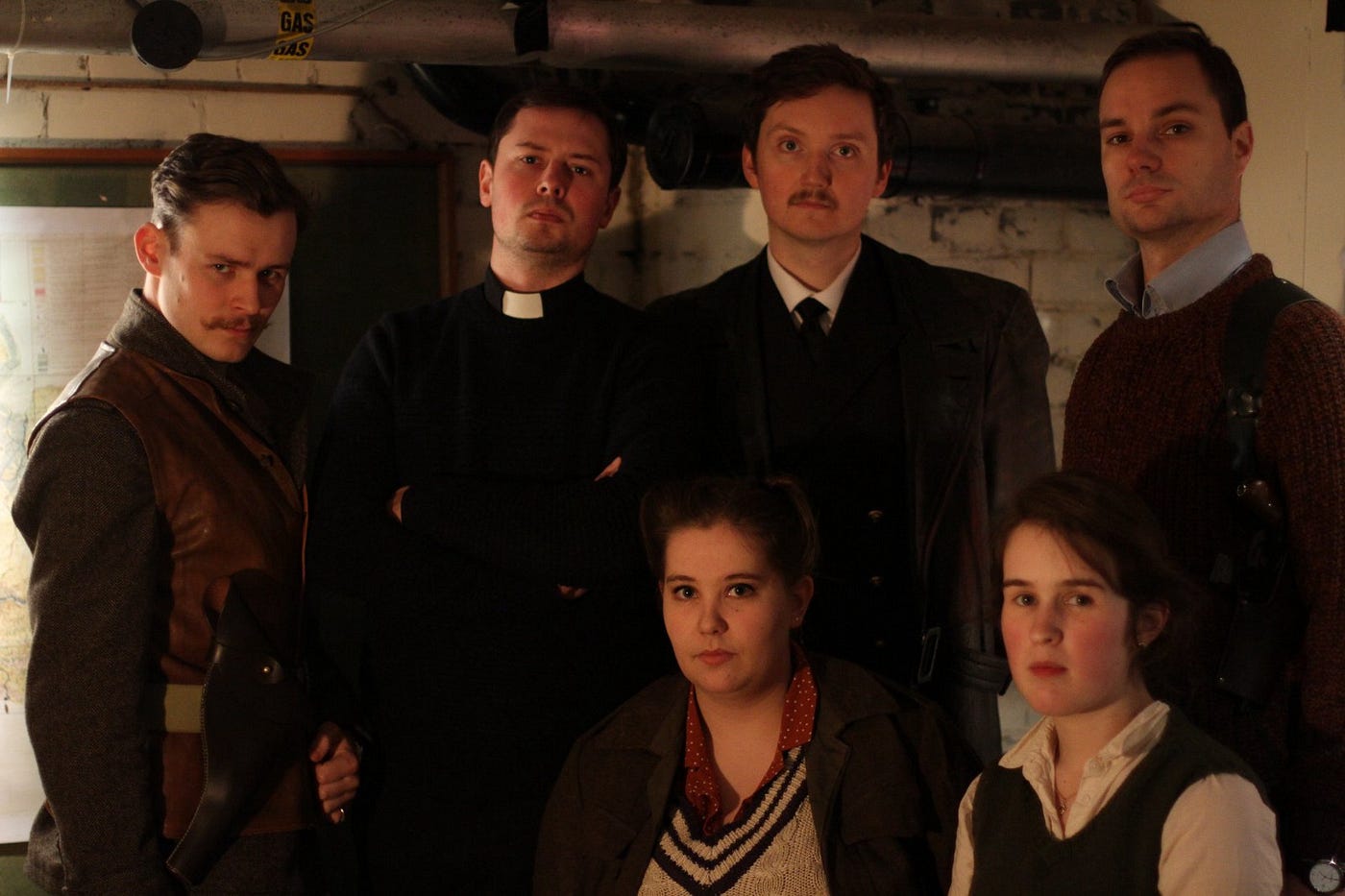
In spite of this, the actors still perform laudably; there are some familiar faces from last year present in this evening’s cast, which is a pleasant surprise given the nature of cast turnover in long-running productions. I attribute their loyalty to the enduring efforts of the producers to maintain the integrity of the original production. The new cast boasts some heavy hitters as well: the previously mentioned Ed Cartwright and Tom Black in the role of Douglas Remmington-Hobbs, a character who carries over from the previous production.
After the performance, I chat with producer-writer-director Owen Kingston and we discuss the challenges set by For King & Country: 1944. Kingston reveals that the show has 16 possible endings, a hydra of a performance that is directly affected by its forerunner. Even the tech-heavy magical mammoth Harry Potter and the Cursed Child Parts 1 & 2 has the benefit of a static script — add in the presence of an in-show bar and, well, brace yourself for impact. Kingston and I commiserate over the frustrations of inebriated audience members and he explains that the crew actually considered interrupting the performance tonight to remove the offending group, but expelling half the audience would have flatlined the show for the night. Kingston assures me that my experience is not normal and that it happened to be the worst audience they’d experienced to date. (I believe it.)
Unruly audience members notwithstanding, For King & Country: 1944 manages to pull its audience through the trenches into a fully engaging experience, with plenty of stimulation and unpredictable outcomes. I found myself falling into a small group of fellow codebreakers, scouring a pile of handwritten letters for clues to open a locked briefcase, while another group flaunted their penmanship as they forged a letter from the Führer. Others tracked train movements across the country attempting to determine where a target payload might be unguarded, while their counterparts determined the most likely landing sites for enemy forces.
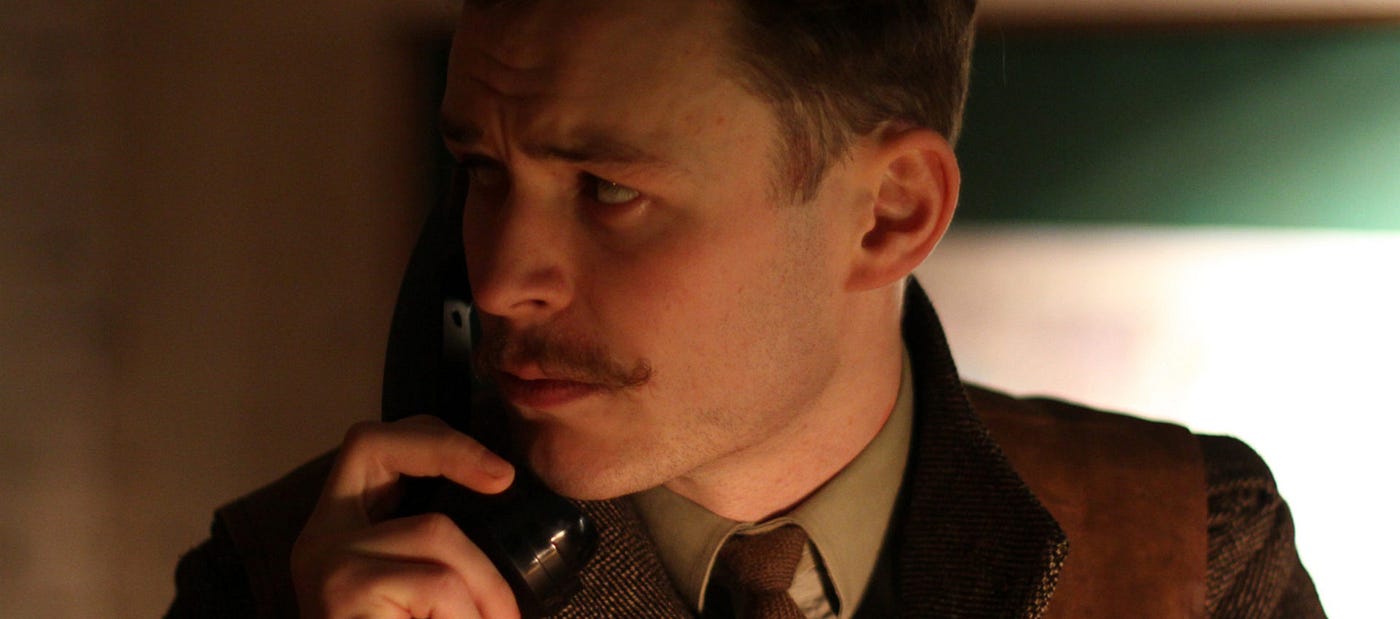
There aren’t many opportunities for custom, individual experiences but there is plenty of opportunity to take the lead on group tasks and feel a personal sense of responsibility as each small victory or failure advances the plot. For King and Country: 1944 is prime entertainment any night of the week (though I’d personally recommend visiting on a weeknight).
At time of this writing, both iterations of For King and Country are scheduled to close by 28 April 2019. We are left with little to do but to keep calm and pray to the producers for an extension.
For King and Country: 1944 continues through April 28. Tickets are £35.
Read our interview with Owen Kingston of Parabolic Theatre.
NoPro is a labor of love made possible by our generous Patreon backers. Join them today!
In addition to the No Proscenium web site, our podcast, and our newsletters, you can find NoPro on Twitter, Facebook, YouTube, Instagram, in the Facebook community Everything Immersive, and on our Slack forum.
Office facilities provided by Thymele Arts, in Los Angeles, CA.


Discussion