



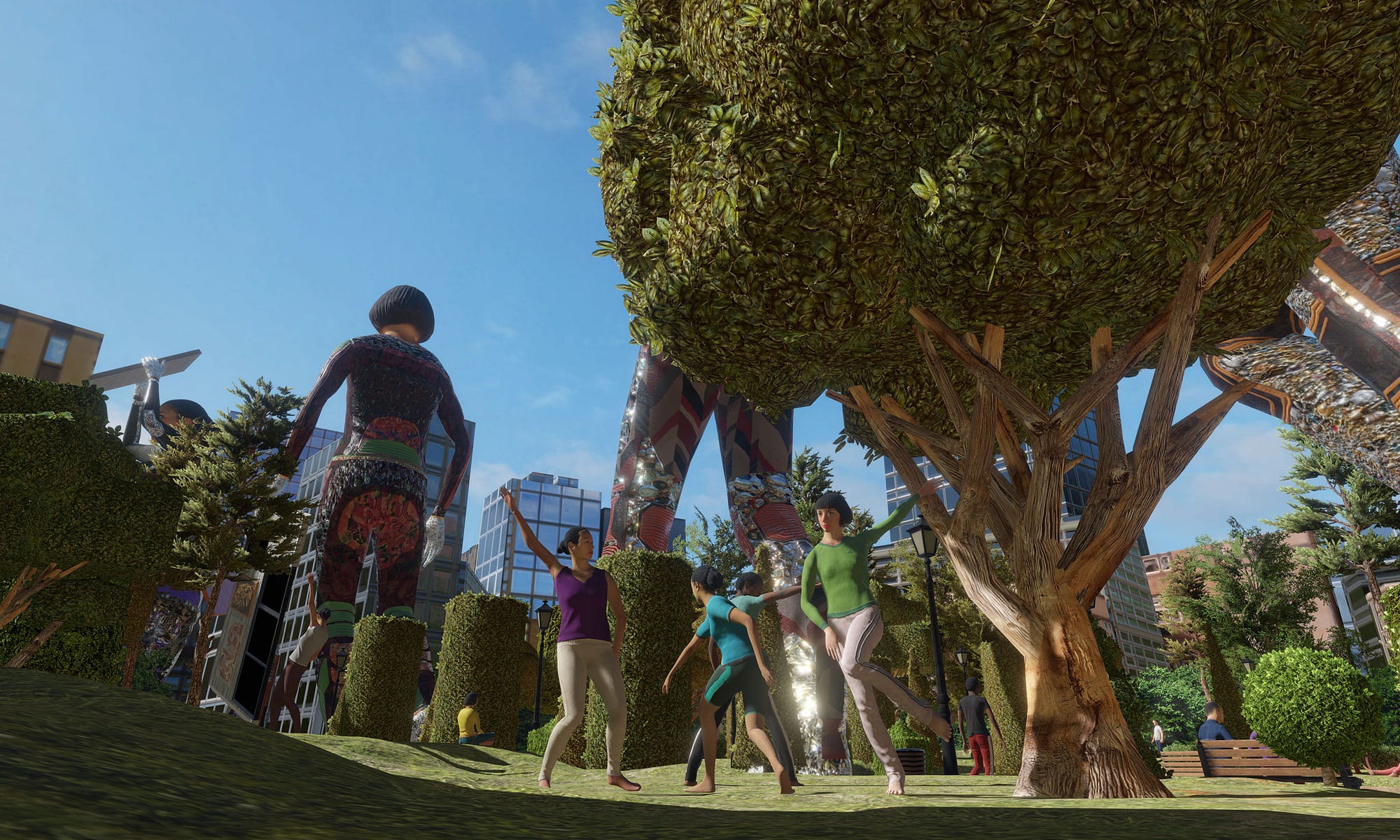
Teknopolis™ is an ambitious program by the Brooklyn Academy of Music taking over the BAM Fisher space through March 10. The program is designed both for adults and kids ages 6 and up; it showcases interactive and immersive art that’s designed to inspire creativity and play. Attendees also have access to a number of 360 films as well as augmented/virtual reality experiences in an interactive arcade. These additional experiences are accessible to kids ages 9 and up.
NoPro NYC correspondents Blake Weil and Leah Ableson both visited Teknopolis and reported back on their experiences:
Blake Weil: When I was a kid, and my family went to Disney World, I remember Epcot had an exhibit called “Innoventions,” filled with all sorts of entertaining tech demos. These exhibits varied in form, function, and quality, but most boiled down to pressing buttons to activate some lights and sounds.
To me at age seven, this sort of interaction was a delight; to my family, not so much.
Similarly, Teknopolis at the BAM Fisher, is a sometimes successful, sometimes disastrous attempt, to make that concept more than just a passing amusement, and to give the adults in the room something to smile at themselves.
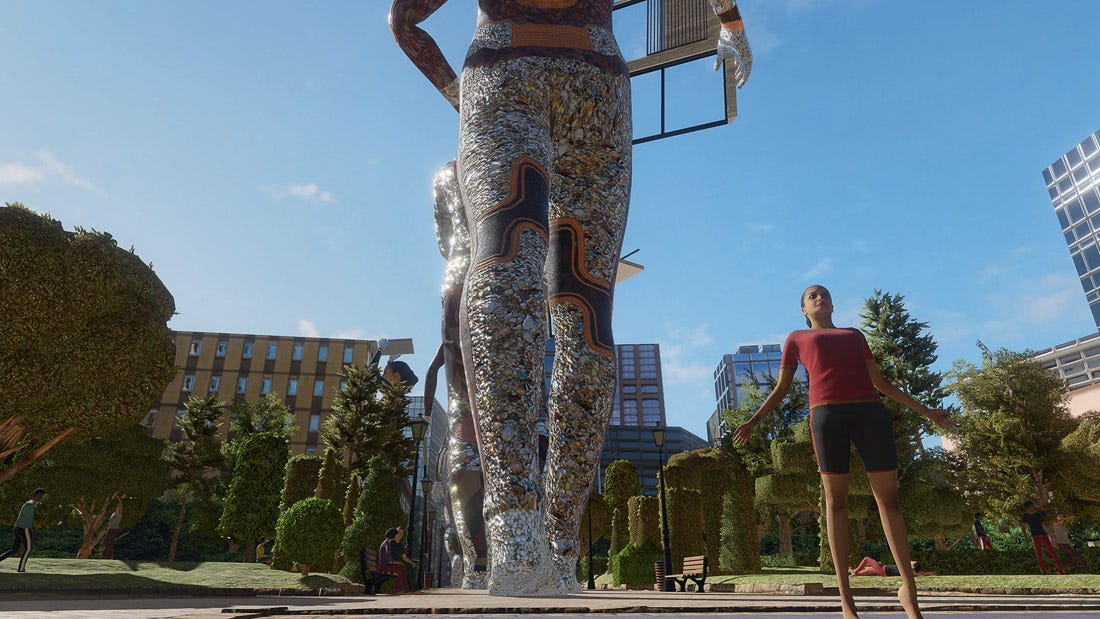
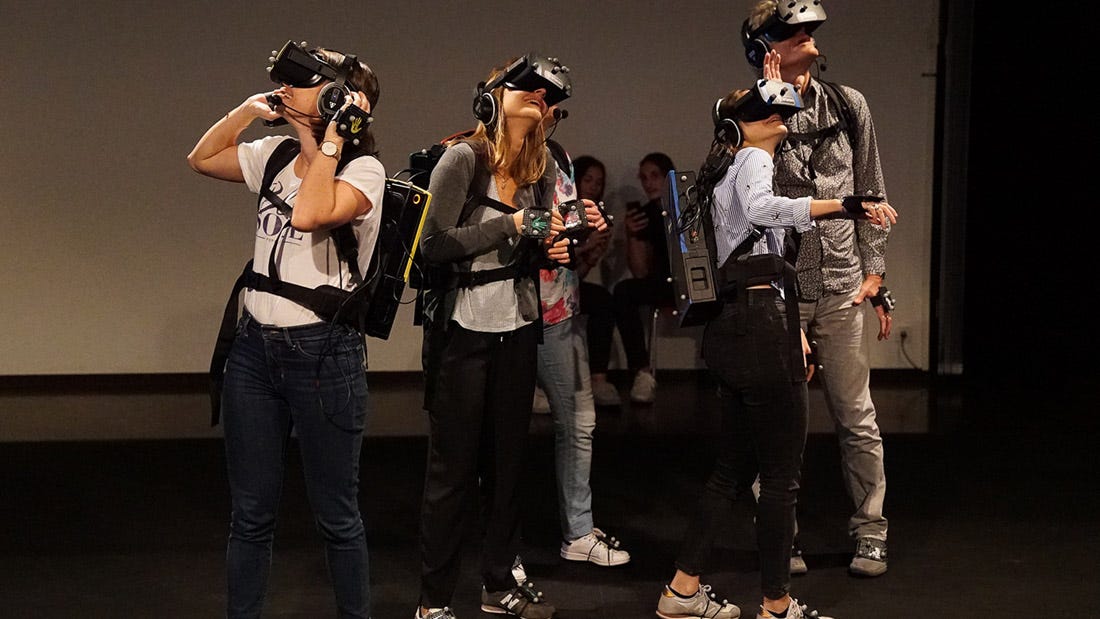
The star of the show is obviously the VR component (which is priced as an add-on to the standard ticket.) Cie Gilles Jobin and Artanim’s VR_I, which previously featured at festivals such as the Venice Film Festival and Sundance, stole the show completely. Using motion tracking and backpack-mounted VR, the piece immerses five participants at a time as dancers whose movements are nearly identical to the motion-captured participants. It plays with scale in the virtual world by sending the audience on a journey growing and shrinking like Alice after a mushroom lunch.
Probably the most fascinating part of the piece was how quickly you forgot who was real and who was a virtual ghost; I would try to dodge out of the way of a dancer, worrying it was another guest, only for them to glide through me. Of course, like most immersive theatre, the experience’s richness is limited by who you participate with. While the piece was fun, its impact on me was diminished by two children in my group consistently vocalizing how frustrated they were they couldn’t fight with or kill the virtual dancers. Although superb, the piece begged for some mixed reality components- the elaborate opening, participants exposed among giants in a sweeping desert, could have been beyond spectacular with a little bit of heat, as opposed to the immersion-breaking air-conditioned room we were in.
Get No Proscenium’s stories in your inbox
Join Medium for free to get updates from this writer.
SubscribeSubscribe
The VR ticket also included some VR mini-games and interactive environments, such as the delightful Play Room by Isaac Cohen (Cabbibo), in which every movement caused a reactive, technicolor environment to rustle and chime; a curious little AR game promoting conservation called FLARMINGOS by Kristin Lucas in which you could create an armada of virtual flamingos performing mating dances; and a handful of 360-degree movies, including some nice documentaries by New York Times VR. On the whole, however, other than VR_I, the offerings came across as distractions meant to justify the price of the ticket, when the spectacular VR_I needed no addendum. Staff also seemed occasionally confused how to work the devices, and tech was occasionally unreliable.
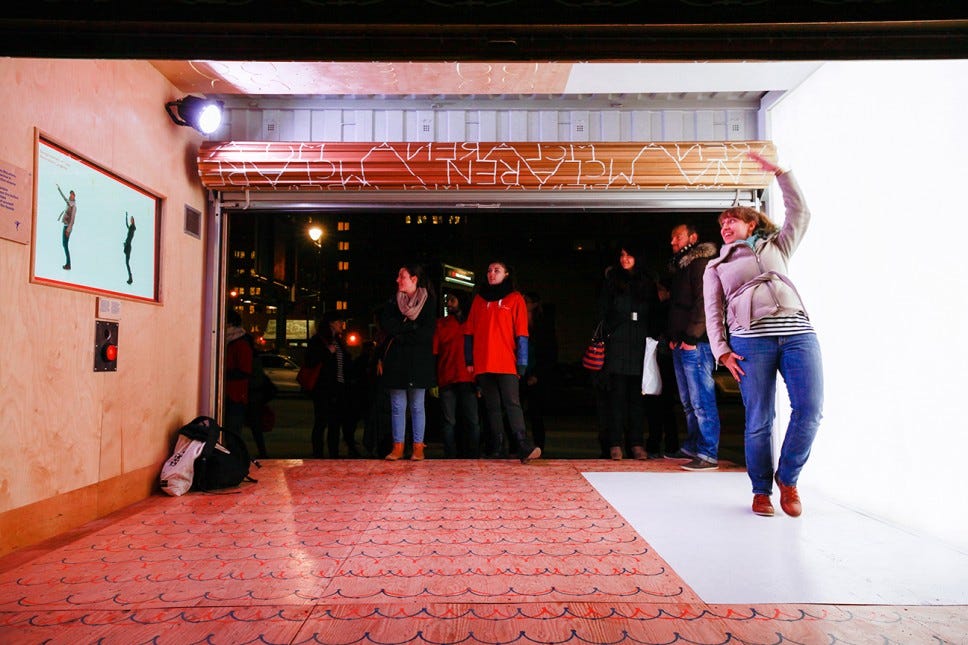
Outside of VR, the interactive art offerings were a similar mixed bag. On one end of the spectrum was the amazing McLarena by Daily Tous Le Jours, which used video to create a dance version of the classic game “Telephone,” and then composited all the dance videos into an elaborate, gradually shifting music video. The experience was enhanced by the artist, being present, as they were able to give a clear and articulate statement of intent for the piece and its reflections on the concept of musical canon to interested participants.
On the other hand, there were distractions like Re-Coded and Reflection Studies, by Zach Lieberman, callbacks to the sounds/lights/buttons school of thought that plagued Epcot all those years ago. They were beautiful, and entertaining for a few moments, to be sure, but felt barely curated. With a little bit more information on intent, deeper than the tiny blurb in the guide, like what I got for McLarena, they could have meant something. Without this context, Re-Coded and Reflection Studies were that much more “sound and fury” so to speak. Interactions seemed random and uncontrolled — yes, putting a plastic shape on the lightbox would make the colors shift and go wild, but why? The lack of understanding from the audience’s perspective robbed the majority of non-VR pieces of the agency that makes interactive works engaging and fun for more than a few moments.
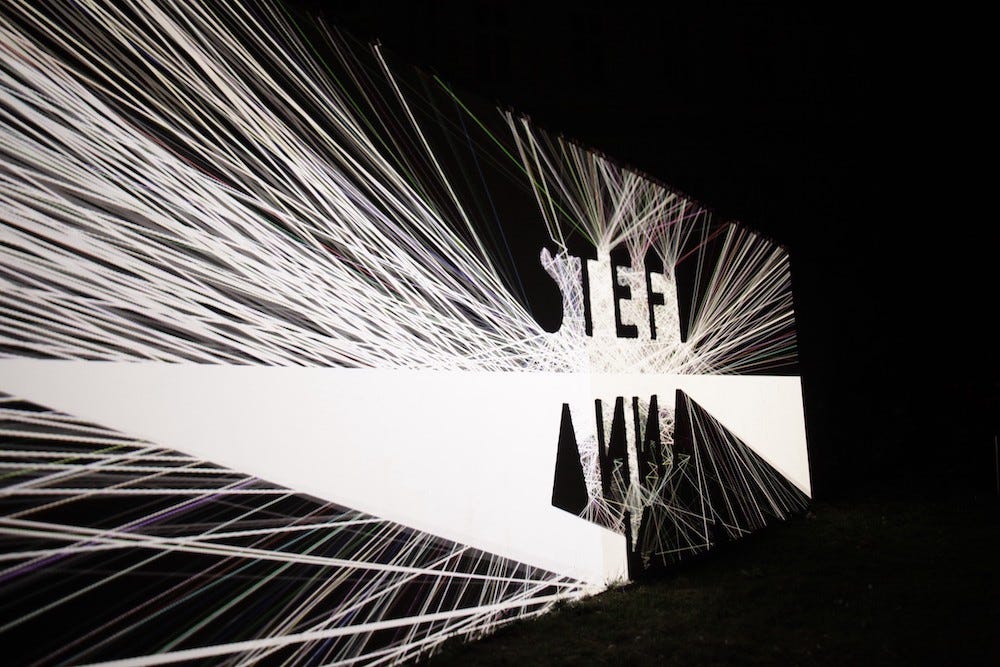
Leah Ableson: I think it is incredibly important to reiterate the exceptional VR_I, the VR headliner piece Blake previously mentioned. From the innovative design to the graceful motion-captured animation, I was endlessly impressed by this piece. Perhaps the most exceptional accomplishment was the use of infrared cameras to map the players in space, allowing for a greater sense of immersion throughout the experience. The avatars in the virtual world moved exactly where and how the players moved in reality. Because of this technology, players could move gracefully in relation to each other, and truly interact physically in the virtual world.
With the ability to clearly see when other players were moving closer to me, or see what they were looking at or exploring in the space, it allowed for us to interact and experience the environment in tandem with each other, truly living in the fantasy world together. Even more so, it allowed the participants to physically interact with each other, reaching out for handshakes or high fives and making real contact hand to hand, because our positions in reality had been mapped so precisely. Bolstered by built-in radio microphones that allowed us to speak to each other in real time, we were actually “there” together.
At the end of the experience, we met again outside of the virtual world, and undeniably felt a bond as a group; without expecting it, we had just gone on some strange vacation together to a virtual world that felt so real.
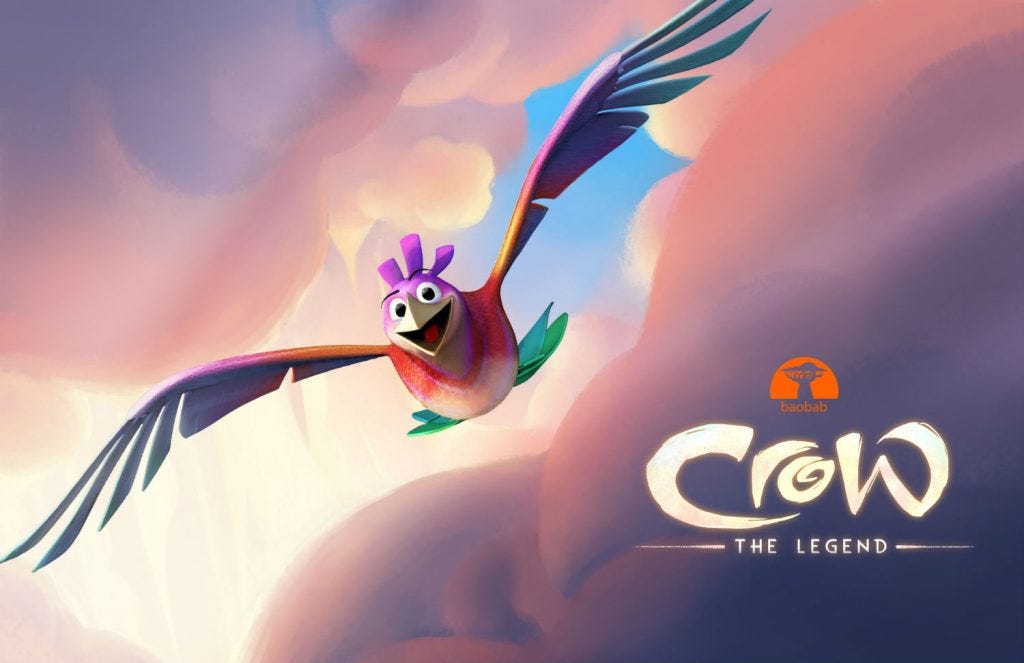
One other outstanding piece that I caught was Crow: The Legend by Baobab Studios (creators of Asteroids! and Invasion!), a stationary VR experience recounting how a crow brought warmth back to a forest overtaken by snow. Lasting a whopping twenty-two minutes, Crow still managed to keep my attention, incorporating bright Pixar-esque animation and a dazzling voice cast (including John Legend, Oprah Winfrey, and more). The story was charming and felt accessible for kids and adults, showing the potential for VR to be used as a storytelling and educational device for all ages. Free from the jerky, low-resolution animation that still often is the norm, Crow was an inspiring look towards the future of VR.
Overall, Teknopolis presented a mixed bag of experiences — those fantastic and those less so. That said, where it succeeded, it exceeded expectations. I applaud Teknopolis for aiming to include multiple kinds of virtual and digital media, and increasing audience awareness around the new achievements and exciting developments on the horizon in these fields. In a way, even the less successful creations point towards a greater understanding of what is working, and what is not, in the digital space.
Teknopolis continues through March 10. Tickets are $16–45.
NoPro is a labor of love made possible by our generous Patreon backers:join them today!
In addition to the No Proscenium web site, our podcast, and our newsletters, you can find NoPro on Twitter, Facebook, YouTube, Instagram, in the Facebook community Everything Immersive, and on our Slack forum.
Office facilities provided by Thymele Arts, in Los Angeles, CA.


Discussion