



I’m sitting alone without my coat, waiting inside of a tent that’s pitched on the deck of a house somewhere in the mountains outside of Colorado Springs, CO. It’s dark and cold outside, and the tent is illuminated by a small lantern. After several minutes of waiting and shivering, a pair of dirty bare feet noiselessly appear at the bottom of the half-zipped door and wait. Unseen hands press against the tent wall from the outside and move down the door with excruciatingly slow speed, eventually unzipping it to reveal the entity on the other side, who beckons me out of the tent.
With a completely veiled face, branches, leaves and twigs sprouting out of its head and body, and a red glow emanating from its midsection, I learn it is a creature of the woods. Speaking slowly, deeply and non-threateningly, it offers a message of hope—that through the darkness, light will eventually come.
Upon instructions to do so, I reach into the cavity holding the red light and drape it around my neck, realizing my hand and neck are now covered in a sticky, gritty goo as if I’ve truly just pulled something from inside of it’s body.
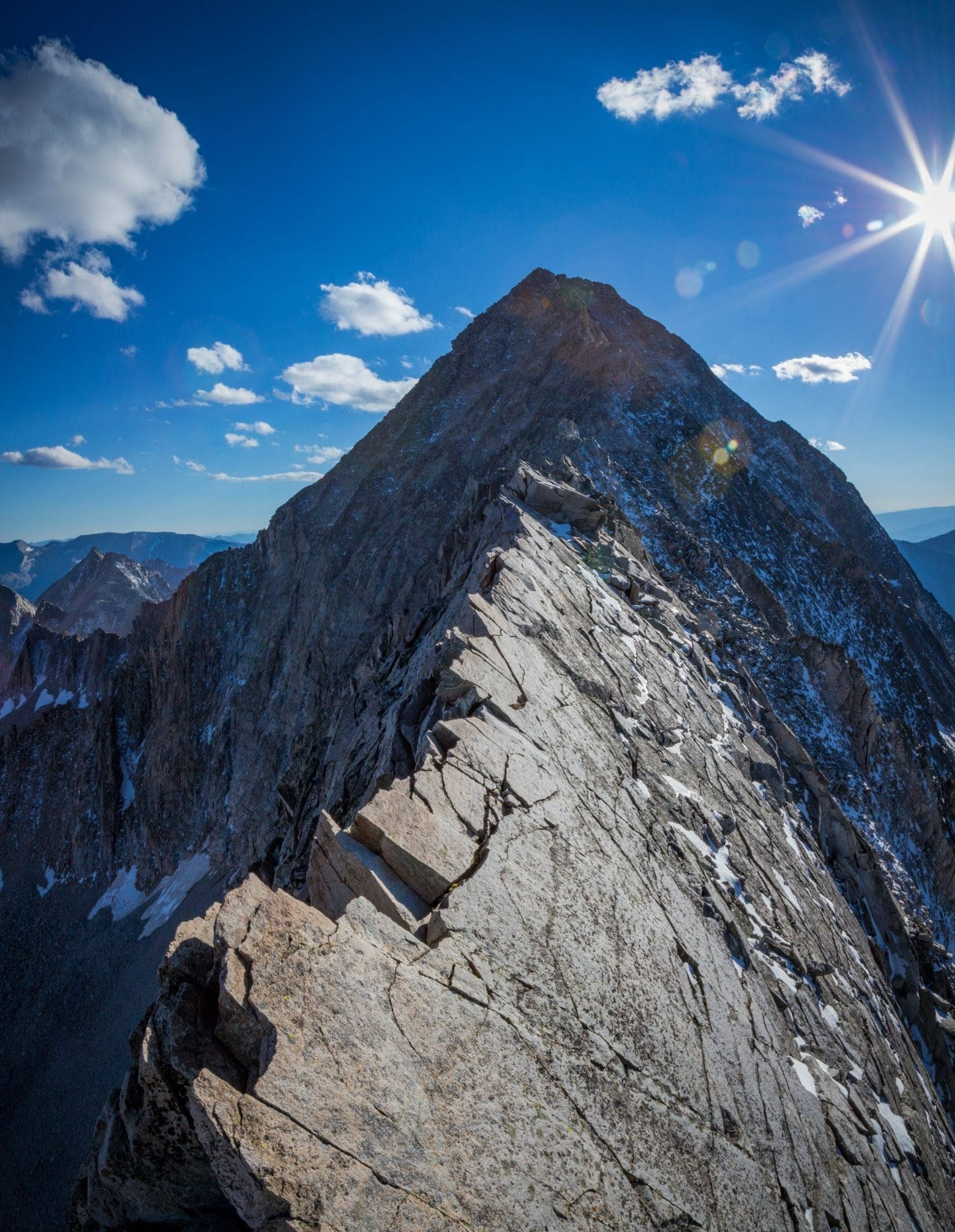
As the creature slips away, the door to the house opens and I’m greeted by my friend, Austin. I know it’s him because we had a phone call a few weeks ago where he asked me to join him on a journey he’s always wanted to take. During that call, he explained that he was sorry for falling out of touch over the years and wondered if I’d accompany him on a hike to Capitol Peak, one of Colorado’s most notorious 14ers (Ed. note: a mountain peak with an elevation of at least 14,000 ft.) due to the “knife edge” that you must traverse to reach the peak.
‘Extreme’ Immersive Horror
And just like that, I’m off on my second solo horror adventure devised by the brilliant team behind Paralysis. The last time we did this was three years ago in Longmont, CO for their debut show Omega. In that experience, I underwent a sort of religious conversion therapy, which put me in a victim role with a strained, if not antagonistic, relationship with my hosts. By contrast, this time Paralysis cast me as the main character’s friend and ally, setting a dramatically different tone from the get-go.
The premise for Site 2 was also considerably simpler, which always makes for better immersive theatre, especially in a high-intensity show where there’s a lot going on to process. A complicated or too-novel storyline only creates cognitive load, taking up mental capacity that would be better served letting the participant focus on the immediate threat of their external environment.
Those are pretend threats, of course, but because they’re delivered with such intensity and physicality, it adds a thrilling layer of reality to it—like stepping into a horror movie that you’re the star of. This aids in suspension of disbelief and pulls the participant in-world like no other format I’ve experienced can do.
Austin’s Story
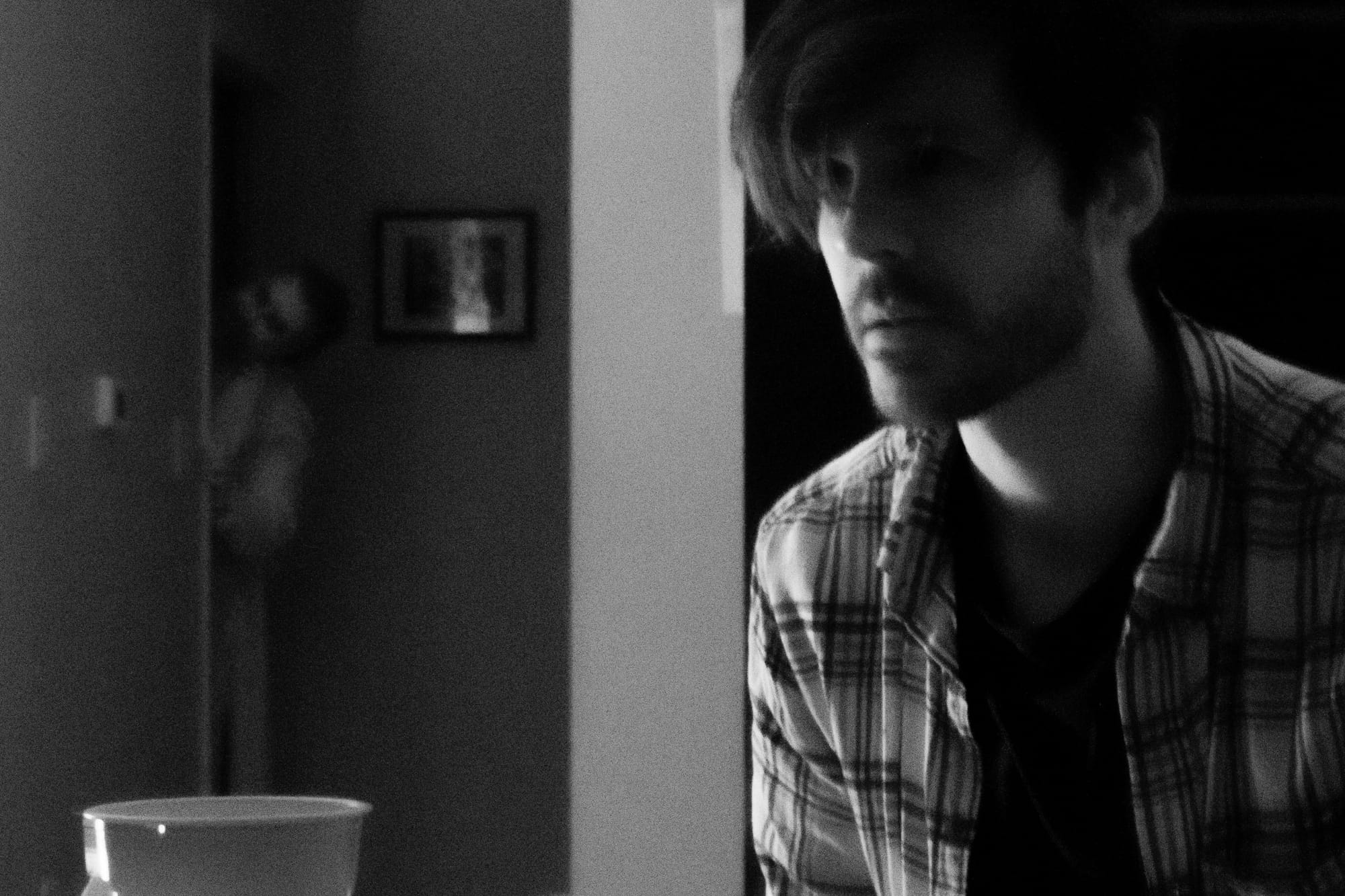
As I entered Austin’s home, dark and unlit except for the red light hanging from my neck, it was immediately clear that he was in the throes of depression with paper, cans and other bits of trash littered across the kitchen.
Not long after I arrived, as we packed our bags with gear for the next day’s long hike, Austin began to tell me about what was troubling him. He explained that years ago he had encountered something in the woods—something he couldn’t quite explain, but that somehow knew his name.
He’d developed an intense fear and paranoia about the entity following him over the past several years. I would soon learn firsthand that this entity was so fixated on destroying Austin that anything (or anyone) that got in the way would just be collateral damage.
As the next several scenes unfolded, the entity made its presence known, as if Austin’s speaking of it conjured it into existence. First it jumped in Austin’s body, causing a momentary flicker of his personality and eliciting unexpected physical aggressiveness from him. He snapped out of it quickly and looked as shocked as I did when the entity left and my friend returned. Next, while Austin continued his story, the entity shifted its focus to the newcomer in the room and attempted to possess my mind.
In the next scene, after taunting me with an impish trick, it turned to wielding words as weapons instead. Not its own words, but Austin’s, from within the confidential thoughts of his journal. This invasion of privacy was perhaps unjustified, but it also revealed something important—the crux of the narrative—that put me in a difficult situation.
I wasn’t sure what to do with this new information or how I was supposed to react to it. I barely got the chance to consider it before I found myself directly confronted by the entity. Thrown against the wall, and then tossed on the bed, it assured me—eye to eye, mere inches from my face—that anything I could say to him would only make Austin’s situation worse.
Pulling Me In
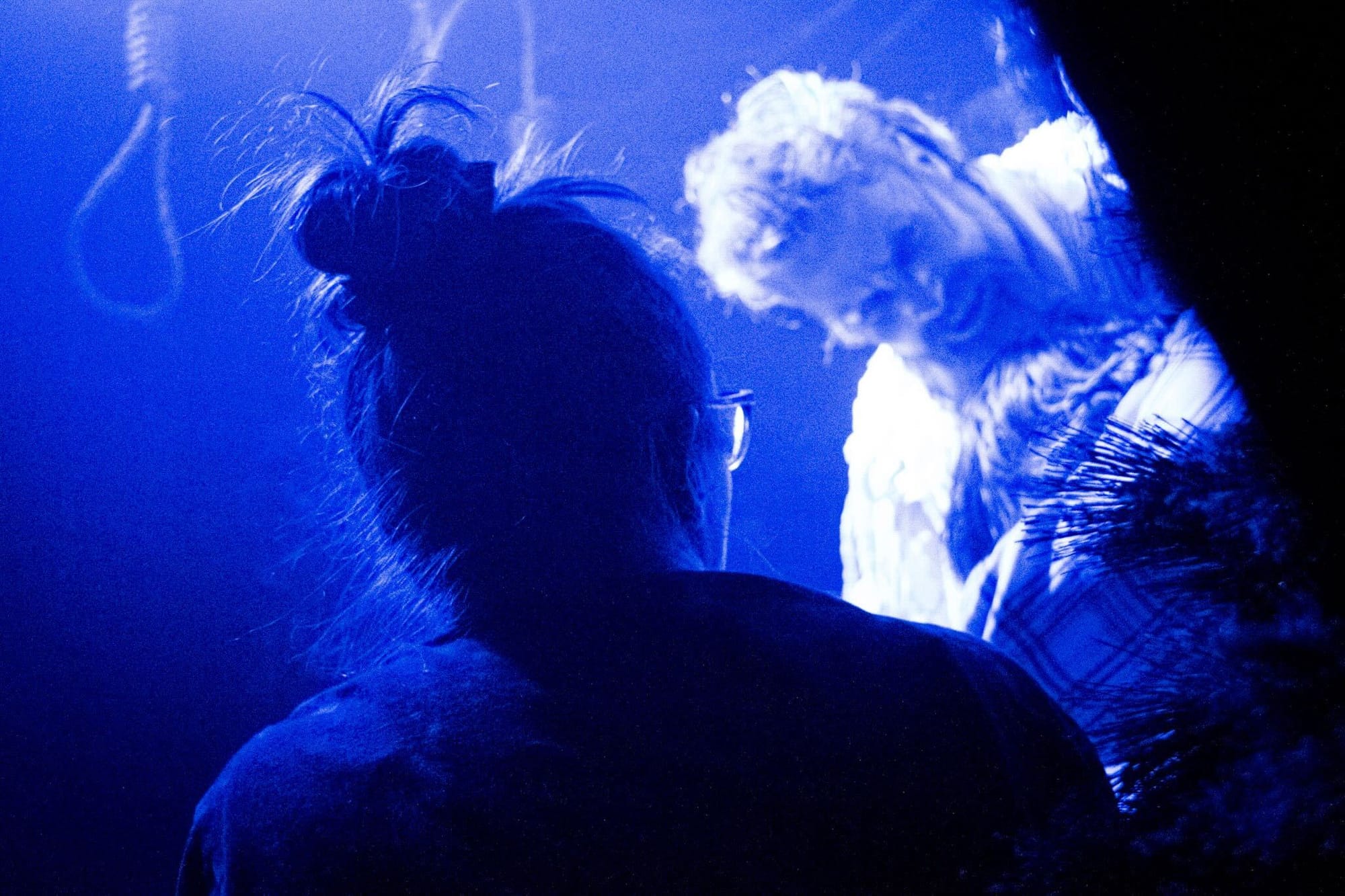
What I read in Austin’s journal made me see him in a different light. I wanted so badly to confront him—to save him from his worst impulses—but kept not finding the right words, or the right opportunity, to do so. I also worried there might be some truth to the entity’s threats—that speaking up might somehow cause more harm than good.
That cognitive load I mentioned earlier? By this point in the show, Paralysis had strategically filled me up with it: a mix of guilt, confusion, and helplessness that was weighing down on me, preventing me from finding the words I needed to say to my friend.
In the final scenes, as the show marched on to its climax and epic finale, these feelings were skillfully provoked and thus intensified. After hiking to basecamp where we were preparing for the final climb across the knife edge, Austin was ripped from our tent and forced to face the entity. In the middle of this confrontation, the entity pointed its fingers in my face and yelled, “And YOU let it happen!” tapping into the growing well of guilt inside of me.
This moment stood out among the rest because it’s when the full realization of it all hit me: I’d had my opportunities to intervene, but never did, and therefore played a part in what was about to happen to Austin.
I felt a lot of things that night, both physically and emotionally. Perhaps counter-intuitively, the physical parts (like breath restriction and physical aggression) never hurt; it was the emotional aspects that brought real pain and depth to the show.
I had been given important information about my friend’s wellbeing and ample opportunities to do something about it. But because I didn’t have the capacity to process it, I squandered my opportunities to confront him. And now here he was on the brink of death, my inability to act having played a role in allowing him to get to that point.
To accomplish something like that—such an authentically deep investment in what’s happening to the lead character—in less than an hour is truly profound.
When I asked the Paralysis team in the weeks that followed what would have happened if I'd spoke up to question Austin about the journal entry, Paralysis Founder & Creative Director David Higgins confirmed they were prepared for that to happen with guests, but chose not to answer my question because “the choices we make in shows like this hit harder when you’re not sure what could have been different.”
This answer displeased me at first, but the more I thought about it, the more I came to appreciate it. They’ve created a choose-your-own-horror-story that you get to live out, except—just like in real life—you don’t get the chance to go back and take the path you didn’t choose. And as any of the other 22 people who saw the show will agree, that kind of thing has a way of sticking with you.
The Finale
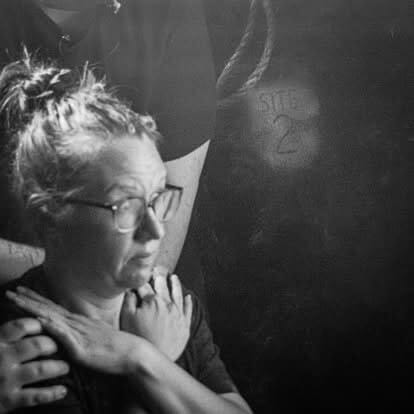
As Austin and the entity continued their confrontation, I was gently guided onto a bench nearby by two anonymous figures dressed in all black who prepared me for the final stunt. They removed my glasses (I’d be instructed not to wear my contacts), told me to lay back on the bench, and restrained my arms at my side.
The way that Paralysis chose to end this story (and the mind trip they took me on in those final moments) was challenging and terrifying in ways that I’d never experienced before. I definitely considered calling the safety word as the intensity was building… but then I remembered something that Theatrical Director Quinn Leary said in our 2023 interview after I saw Omega:
“We want to make sure that we are creating an environment where our guests can give themselves freely to the experience without having to fear for their safety, because that only creates a barrier between you and the ability to lean in and let yourself have the right kind of fear in these kinds of shows.”
So that’s what I did. Instead of yelling the safety word, I just yelled in general, because it was really fucking scary. But that, must I remind you, is the whole point of signing up for an experience like this: to actually be scared, not to pretend to be scared. That’s the leaning in part that Leary’s talking about, and I was able to do that because I remembered that my physical safety was at the center of the entire stunt.
So I chose to trust that I would come out OK on the other side and instead focus on the insanity of the situation I found myself in. It went on for several minutes, the first opportunity I’d had since the show began to really sit with the uncomfortableness.
What I at first mistook for a death simulation had instead been a sort of battling of manufactured demons. Struck with guilt and sadness that then threatened to snuff out my own life, I had charged on and pushed through. Reaching the end of the final stunt was a truly triumphant moment, both physically and emotionally.
This type of work is not for everyone. In fact, I believe it’s not for most people. But those of us who have found our way to this community do so in pursuit of a type of rich storytelling that you can feel in your bones and will carry in your mind for years (probably decades) to come.
The final stunt was insane, but just like in Omega, the extremeness of the experience was never the point; that was icing on the cake, an exclamation point at the end of a beautiful line of prose. This show, for me, was about the complexities of mental health and how it can impact loved ones just as much as those who are suffering.
Paralysis successfully tackled that difficult subject by creating an experience that made those hard truths feel like a nightmarish reality. Site 2 was both awe-inspiring and terrifying—a real delight for us fans of dark, heavy narratives seeking something truly scary and immersive.
Discover the latest immersive events, festivals, workshops, and more at our new site EVERYTHING IMMERSIVE, home of NoPro’s show listings.
NoPro is a labor of love made possible by our backers. Join them today and get access to our Newsletter and Discord!
In addition to the No Proscenium website and our podcast, and you can find NoPro on Bluesky, Facebook, LinkedIn, YouTube, Instagram, and in the Facebook community also named Everything Immersive.


Discussion