



“Climate change is happening, humans are causing it, and I think this is perhaps the most serious environmental issue facing us.”
—Bill Nye
Well, you heard it here first folks. Climate change is real and we’re the reason why the planet is burning. Of course, I’m sure most readers here already know this and are taking concentrated action to do what they can to help (unless you’re our very own President, who oh-so-conveniently scheduled his own unrelated session during the UN’s summit on climate change last week, but that’s an article for another day). In light of the stunning showing at the climate marches across the world last Friday, it’s clear that the public consensus is shaping up to be that climate change is BAD. In case you don’t already share this point of view, Arcadia Earth has set down roots in SoHo, boasting an exhibit of fifteen rooms to take participants on a “multi sensorial journey through planet Earth.”
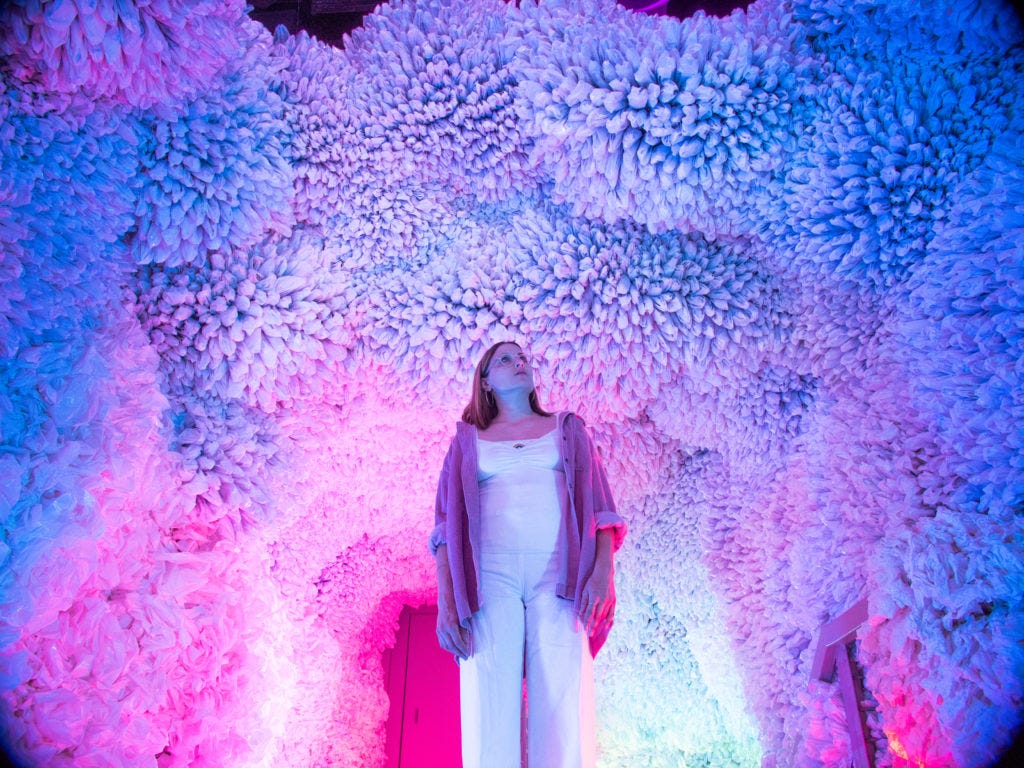
With projection design by Meta; two VR films created in association with EarthxFilm by Adrien Moisson, Christophe Bailhache, and Sophie Ansel; twenty six augmented reality experiences; and art installations created by artists such as Basia Goszczynska and Poramit Thantapalit, the project has an impressive team behind it — leading audiences to believe they are in for an extraordinary immersive treat, and they would be right, for the most part.
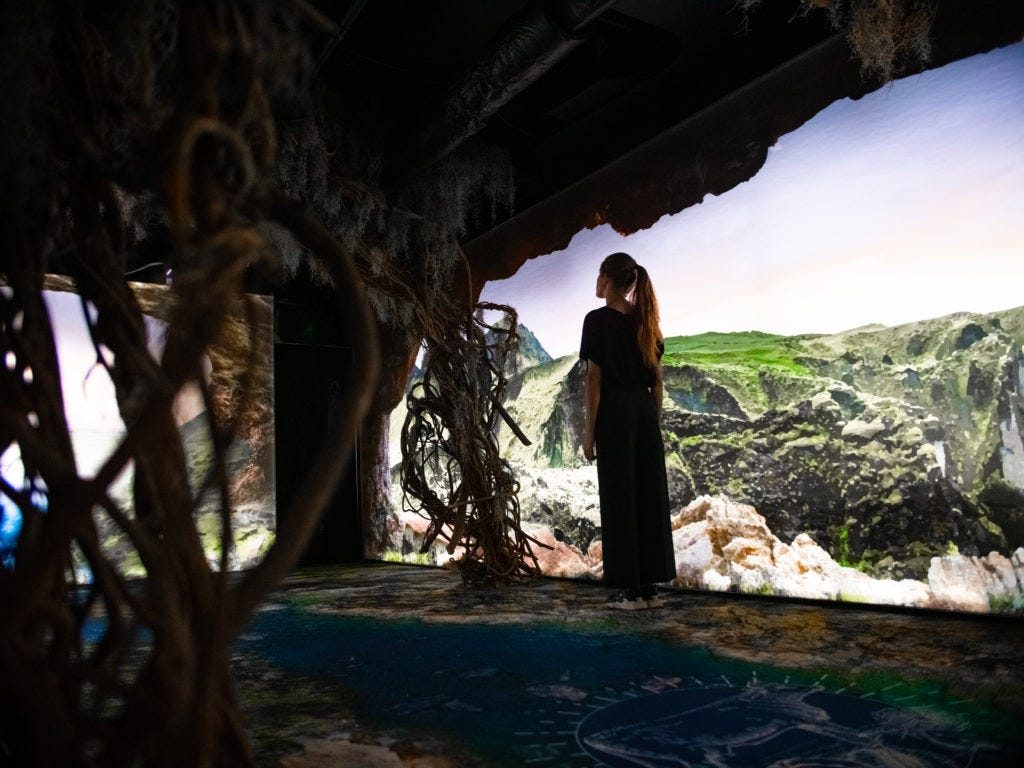
Formatted so participants can do the experience at their own pace, Arcadia Earth reads very much like a “selfie museum” as opposed to a scripted experience. Audience members receive iPads with AR software and are given a brief training on how to use them before entering the first of fifteen rooms. Each room has been curated by groups of artists working in various disciplines to blend installation art with AR and VR, creating highly visceral worlds spanning from the depths of the ocean to the treetops of the jungle.
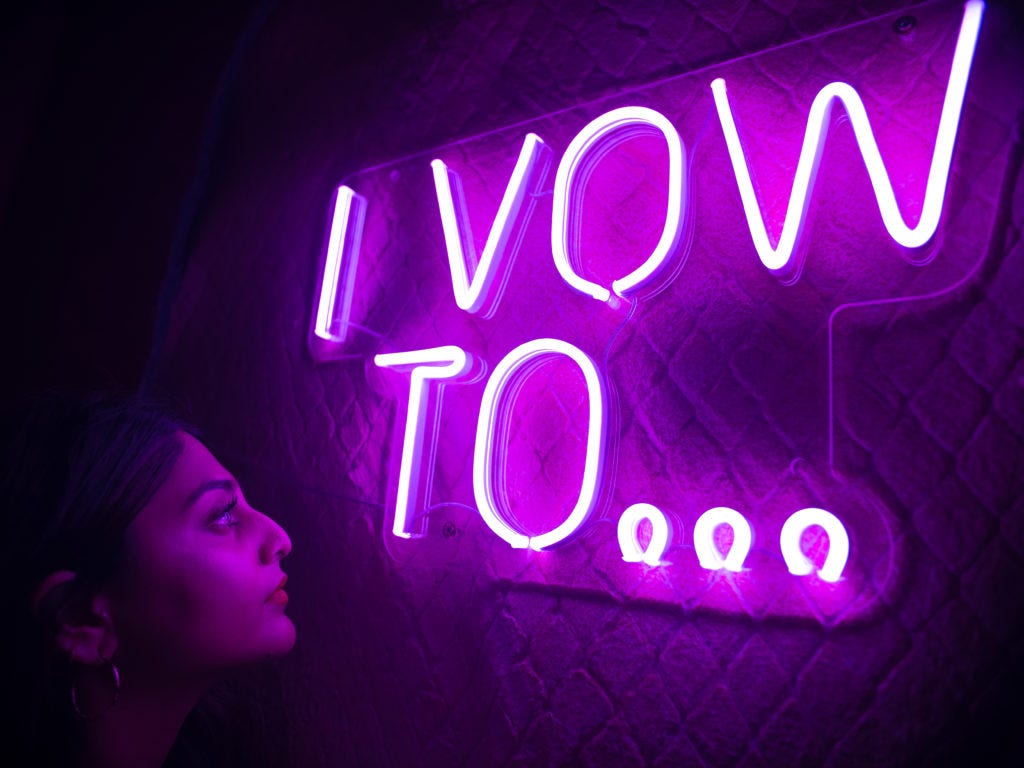
The major thematic concept is climate change, particularly in relation to individual consumption. The experience as a whole is one part educational documentary, one part commercial marketing experience, and one part photo opportunity. Participants make their way through the rooms while a Big Brother-like voiceover educates them about the impact of eating meat and consuming single-use plastic. The journey ends in a room that prompts audience members to take at least one vow of how they will change their behavior based on what they learned today, like “waste no food” or “use less water.” After taking your vow, you can even take a selfie with your vow written above you in neon lettering. Although the art is stunning and well-produced, and the subject matter is noble, the intended effect is somewhat pretentious, superficial, and lackluster, creating an overall feeling of trying too hard by putting a focus on commercial consumption as opposed to large scale societal change. The lobby of the experience even features a large shop of sustainable products for participants to buy in order to support the vows they just made.
Get Allie Marotta’s stories in your inbox
Join Medium for free to get updates from this writer.
SubscribeSubscribe
Arcadia Earth does succeed tremendously in their integration of technology into the exhibit. I was impressed to find that the design of the AR and VR elements was very cohesive and simple to use, even my tech-phobe parents would be able to participate in this exhibit with ease. The AR elements are scattered throughout the exhibit, with tags on the walls and floor that can be activated by viewing through your iPad. You may find yourself surrounded by a school of jellyfish in an oceanic themed room, or later inside a trash cyclone that has suddenly opened up on the floor. The AR also features tags that offer facts and tips about the theme of each room, allowing for the self discovery of additional information as you progress. Both facets of the AR were complementary to the tangible exhibits and provide a fun scavenger hunt of treats for participants to uncover if they’re curious (and patient) enough.
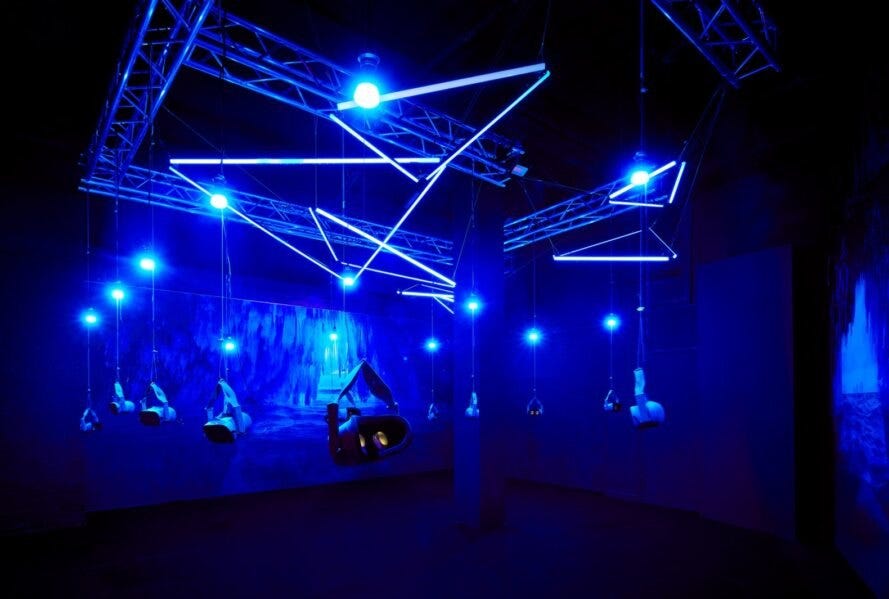
The VR components of the experience were condensed into two separate rooms, each featuring a handful of headsets dangling from the ceiling for easy access as participants move through. Once picked up and placed over the eyes, the headset begins a VR film. Both films are fairly atmospheric, which allows participants to step in and out of each VR experience as they fancy. However, the extraordinary craft of the film comes in the form of a visual artistic narrative reminiscent of photography. The perspective of the viewer in each film is carefully considered which creates an inherent sense of story. For example, one of the films was placed in a room detailing how we can protect our environment features different moments of exotic wildlife. The viewer sees lions interacting with each other, then suddenly the animals approach, creeping up to swat the viewer’s nose in VR. Later in the same film, the viewer is placed in the middle of a snowbank as a pack of wild bison run past on either side. The visual narrative and consideration for point of view in the VR films is exceptional and is some of the most intriguing development I’ve seen in VR as of late.
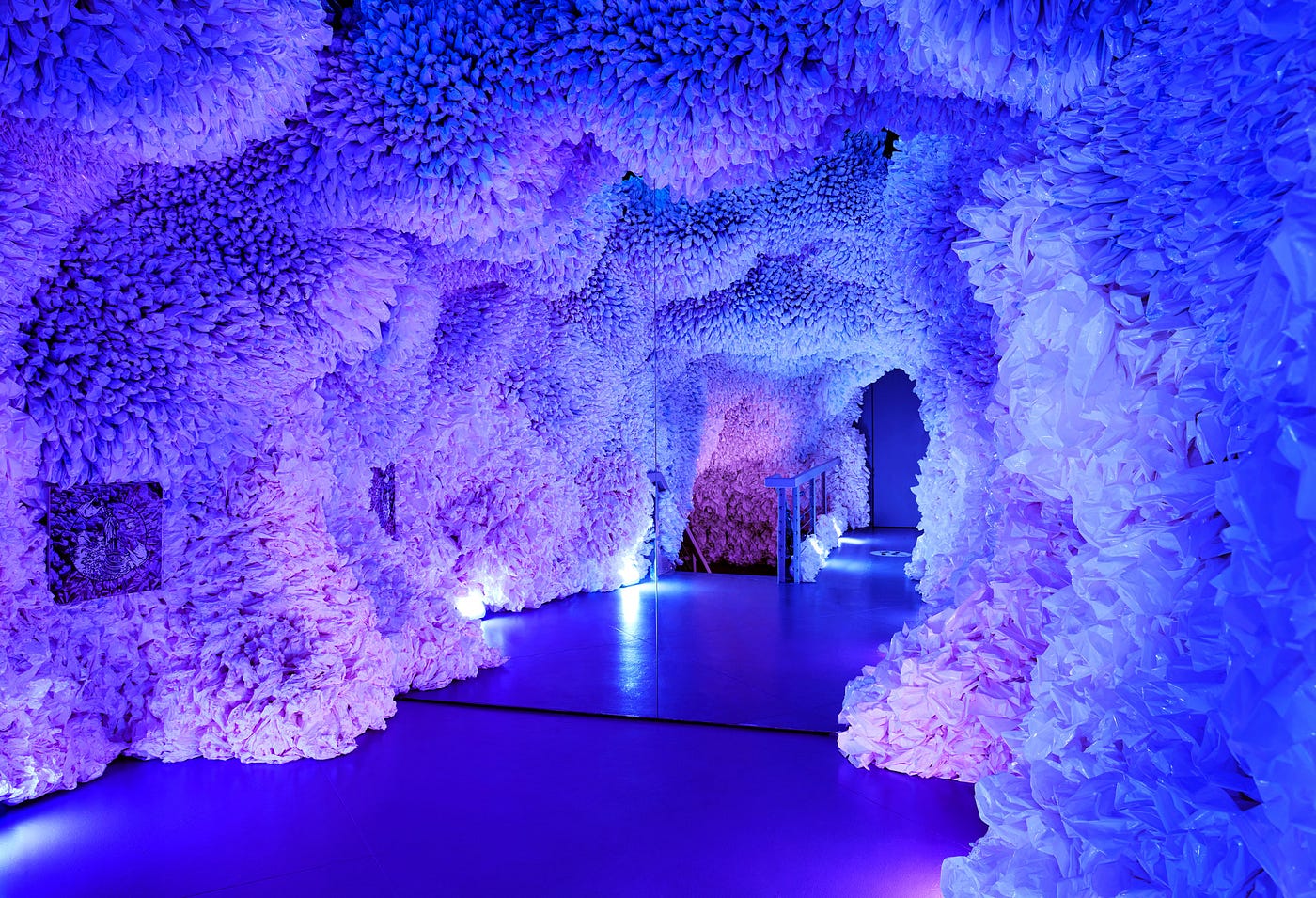
Although Arcadia Earth is filled with beautiful art installations and is incredibly successful in the integration of technology-based storytelling and immersion, I left feeling disappointed overall. I admire the effort to educate the public and create awareness about climate change, but I can’t help but question the efficacy and integrity of the project. In fact, I felt the same way walking past the climate march that afternoon when seeing all the shiny new poster board signs and all the trash littering the streets as the protesters marched on. I know what they’re doing is important and worthwhile, but how can we demand the world protects our environment when we can’t even support that statement ourselves? After leaving Arcadia Earth, I wondered what the environmental footprint of the exhibit looks like. Sure, the art is made of recycled materials, one installation is even created using approximately 44,000 plastic bags, the same amount New Yorkers consume in one minute, but what about the construction of the rooms and the storefront, and all the more “boring” elements necessary to run an experience such as this? I’m sure there was some environmental consideration but at the end of the day it’s a commercial outlet and there are budget demands to be met.
My other point of hesitation in considering the impact of Arcadia Earth is the audience it will reach. Awareness of a movement is integral to its success, but shaming individual consumers into eco-friendly behaviors is a tired and ineffective tactic. It’s no secret that big business is at fault for a massive amount of environmental damage, in fact, according to a 2017 CDP report, just 100 companies are responsible for the production of 71% of the world’s greenhouse gasses (source PDF). Not to mention the US military is one of the biggest polluters of the world, earning an annual carbon footprint the size of an entire country (source pdf). With the majority of harmful actions being done by corporations and institutions, how can we possibly put the blame on consumers alone? Of course, everyone needs to do their part, but minimizing the climate crisis to a debate of plastic vs. paper straws is just irresponsible. And this is exactly the audience Arcadia Earth is targeting in their call to action. But can a selfie museum really stop climate change? Sure, it’s a great way to access a large audience, but the trendseekers this exhibit will attract are more likely to care about their social media image than bringing their own straw to Starbucks. The climate march is this week’s hot event and the coolest thing to post an Instagram photo of, but is exposure and awareness enough and is this the network of people we can count on to actually do the work? How do we hold each other accountable after the hype is over? Even more monumental than that, how can we get the real players, like the government and corporate America, to pay attention and create drastic change?
These are big questions, and I certainly don’t have the answers to them. I was raised to believe that art does have the power to create change, but I guess my disappointment in Arcadia Earth comes from the consideration of integrity. We can create a beautiful and compelling portrayal of what we believe in, but if the purpose of the art is a call to action (especially with a budget like this one), I expect a more legit effort to actually incite change.
Arcadia Earth continues through February 2020 in New York City. Tickets are $24–33.
NoPro is a labor of love made possible by our generous Patreon backers. Join them today!
In addition to the No Proscenium web site, our podcast, and our newsletters, you can find NoPro on Twitter, Facebook, YouTube, Instagram, in the Facebook community Everything Immersive, and on our Slack forum.
Office facilities provided by Thymele Arts, in Los Angeles, CA.


Discussion