



An intimate, immersive staging of the racially-charged play from 1964
“You don’t know anything except what’s there for you to see. An act. Lies. Device. Not the pure heart, the pumping black heart. You don’t ever know that. ”
These words, spoken by the lead character Clay in Amiri Baraka’s 1964 play Dutchman are somewhat of a thesis for the piece: after a continuing history of oppression, Black Americans have been forced to hide themselves to protect themselves. Told in a continuous dialogue between a black man and a white woman and taking place in a subway car, Dutchman examines the chronic racism deeply woven into American society, and the abuses that Black people, and the Black Identity as a whole, suffer at the hands of discrimination, both systemically and individually. A recent revival at Long Island City’s Secret Theatre by director DeMone Seraphin brings this striking story into the immersive realm. Playing out over fifty years after the original piece was produced, this revival built upon the long, pernicious history of racism in the US that prevails still to this day.
There was also a technical question that crossed my mind as I entered the location for this production of Dutchman; standing in front of a fairly standard local theater, I wondered exactly how “immersive” the performance might be ( a question that comes up a lot when new works in our community are released).
I had this question answered in a few ways. (Spoilers follow.)
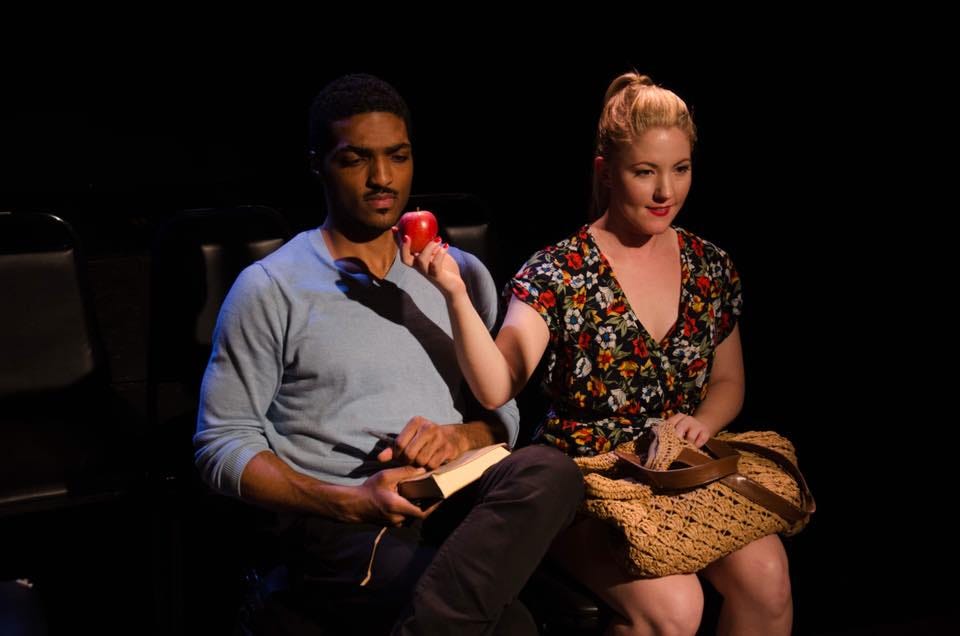
In terms of physical environment, Dutchman was an encouraging effort towards displaying how aspects of immersive and site-specific theatre can enhance classic works. The “one-scene” structure of Dutchman (taking place in one dialogue) felt new when presented in a hand-crafted 360 degree environment: audience members could sit on the train car, surrounded by the action, and look the characters they encountered in the eye. I was particularly impressed by the spectacular light and sound design present throughout the performance, as with each carefully placed spotlight or sound cue, the “subway car” environment became richer and more believable.
Get Leah Ableson’s stories in your inbox
Join Medium for free to get updates from this writer.
SubscribeSubscribe
Besides the technical artistry of the show, a further emotional immersion occurred as the piece progressed. Connecting with the characters was easy, due to the passionate performances of Alphonso Walker Jr. and Megan Smith, leading the show as Clay and Lula. Being up close and surrounded by their powerful deliveries of the piece pushed the production the last step into the realm of the immersive. There was something so moving about catching a glance from Clay as the action reached its peak, while he broke down mere feet from me, torn apart by what it takes to survive in society as a black man. As I held his eye in the space between the heads of other “passengers,” the situation we were in felt wholly real. Despite the fact that I was confined to my seat, I didn’t feel like I was sitting in a theater anymore. I had become a spectator to this man’s distress — which was the entire point.
There are a few things that I view as the building blocks of an immersive experience: you feel surrounded by the story; you feel a certain agency in how you react to what you encounter; you are able to connect more intimately with the characters and environment around you.
So, who was I in this piece? Was I the typical immersive “ghost,” floating through the narrative? Was I fully involved as an individual, able to speak back and choose my own path?
In that moment when Clay was looking into my eyes, I realized who I was as an audience member: I was myself, in “real life,” and I was seeing myself reflected in the other passengers around me. I became acutely aware of how still I was, how quiet, how much I was just “allowing” it all to happen. I, and the rest of the audience, remained glued to our seats as Clay was stabbed and removed from the train. I was a white woman who could never begin to understand the experiences feeding the emotional storm that is Dutchman, but who, at least, was hearing these experiences and listening. In reality, when I am on the subway, there is a shield of anonymity that I hide behind, and that can be used as an excuse for not speaking up. Here, I was front and center, literally under a spotlight. I was, in a way, forced to confront injustice, head-on — an extremely important learning experience, that we should all be told again and again. In terms of driving home the main message of Dutchman, this production team hit a palpable and undeniable bullseye.
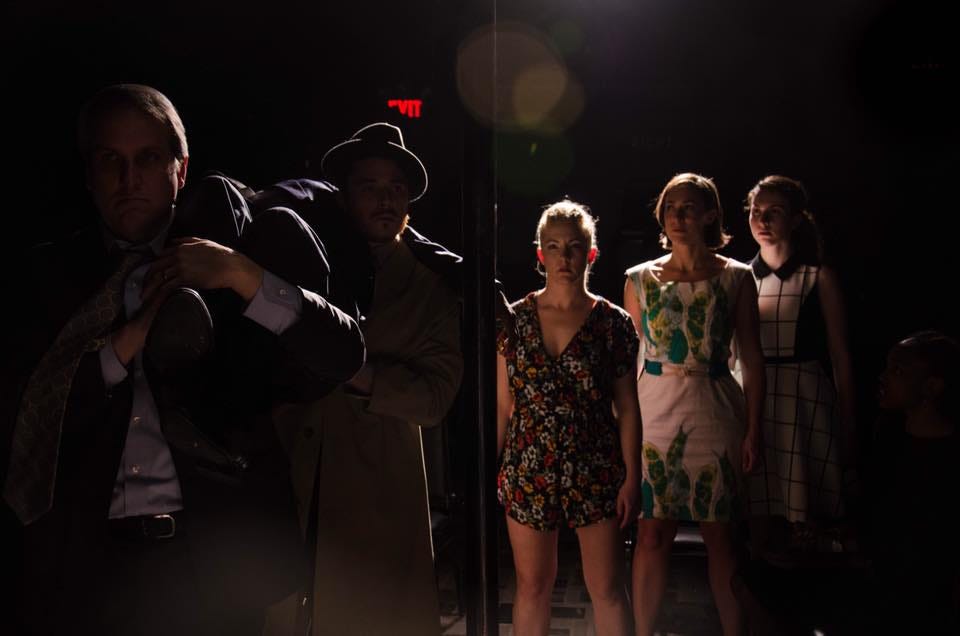
Dutchman is a piece that works to drive home the ways in which White Americans abuse and commodify Black Americans, particularly through the appropriation of their culture and the fetishizing of their bodies. It explores self-victimizing behavior at the hands of White Americans and the internal silencing that people of color are forced to do in an effort to survive this. Seraphin’s new ending to the play, depicting resistance to this oppression led by a Black woman, offered a powerful (and cautiously optimistic) look towards the future. It’s unfortunate that we, as a society, still need pieces like Dutchman to acknowledge and affirm the ongoing systemic injustices in our society, and I extend a lot of gratitude to the Dutchman team for opening themselves as teachers and displaying such powerful vulnerability. By telling the story of Dutchman in an immersive setting, this performance highlighted the ways in which we, as a society, allow these injustices to happen, and the dangers of being that subway spectator, silent and watching.
This revival of Dutchman has since concluded its run. You can find upcoming programming at the Secret Theatre on their web site.
No Proscenium is a labor of love made possible by our generous backers like you: join them on Patreon today or the tip the author of this article directly on Gumroad:
In addition to the No Proscenium web site, our podcast, and our newsletters, you can find NoPro on Twitter, Facebook, YouTube, Instagram, in our online community Everything Immersive, and in our Slack forum.


Discussion