



Returning for its 7th year in 2026, Denver Fringe continues to grow, evolve and solidify its role as an incubator for innovative performance art. As an enthusiast and supporter, I love the festival for my own reasons, like the small, intimate performances and the smorgasbord of options to gorge myself on for a weekend of weird, interactive theatre.
But I also love the way that this festival is designed just as much for the artists as the fans. There’s networking afterparties every night and artist-forward events like Flashlight Cabaret. At Speed Previews on opening night, the audience was almost entirely artists, and there were artists in the audience at every single show. They’re connecting, supporting each other and building community all weekend long, and it’s cool to see it happening at every turn of the festival.
Of the 14 shows that I saw this year at Denver Fringe, two shows stood out to me in the immersive category: Dance of 100 Faces, a culty dance party, and One of Us Becomes God, a democratic experiment in choosing what happens when you die. More on both of those below, but first—I noticed that a lot of the immersive shows on my schedule also showed up in the clown category. Heading into Denver Fringe weekend, I wondered if these shows would be truly immersive, or if the term was being conflated with “interactive.” The answer, it turns out, was somewhere in between.
Clown Shows Breaking the 4th Wall
There’s something interesting happening right now in Denver at the intersection of clown and immersive. I saw a lot of great productions at Denver Fringe this year that were, for the most part, proscenium shows: we sat in seats and the artists stood on stage to give a loose but still on-the-rails performance.
And yet, they somehow crashed through the 4th wall with skilled improv designed around a simple and easy-to-grasp idea. They quickly establish bizarre new worlds that immediately pull me in. Their shows rely on audience interaction, and those interactions become the content of the show. They are not quite immersive by a technical definition, but something different from a traditional stage show. And all of them were clown.
At Impossible to Forget, John Clayman’s character, The Lion, swears he can fix anything and spends time fielding requests from the audience on what he can fix for them. Using his own excellent improv skills, he “helps” these people from within the audience, right in front of their seats. Later, when his veneer of confidence starts to crack, it is only through probing from the audience that he starts to unpack his issues for us.
In Melo Acevedo’s Crabman (winner of the 2026 Denver Fringe AF award), the audience acts as his viral online following who’ve amassed in person to watch the finale to his web series where he’s stuck a crab up his ass every day for the past 999 days. In this show, the audience is encouraged to interact with Crabman in a way that felt a bit like heckling at a comedy show, except that Crabman’s reaction to every single audience remark was the joke.
On the surface, It’s Your Wedding was, simply, a wedding. There was a processional, a brief ceremony, a cake-cutting and speeches. But this show turned those time-honored traditions into an unhinged social experiment as strangers in the audience became the happy couple’s guests and wedding party. Some of us received name tags with honorable distinctions such as “the couple’s dishwasher” while others stood at their side for the exchange of vows—all while watching the bride gradually crack under the mounting pressure of each step in the charade.
In Don’t Kill Daisy, Soleil Kohl plays Daisy, who relies on audience input to help her navigate the desert rave she’s currently attending. In this choose-your-own-adventure video game performance, audience members select items from the stage at the beginning of the show that they later offer to Daisy at opportune times as tools, weapons and costume changes. Give her the wrong item at the wrong time and she dies. It’s OK though; the game can always be restarted!
Our participation isn’t what makes these productions so immersive; it’s the design of those interactions that put us in the driver’s seat. We weren't simply answering questions whose answers had no bearing on the show. Instead, our participation became essential to the experience. Without it, these shows couldn’t exist. And that’s what makes them immersive.
They were also all completely absurd, which is an effective shortcut to suspension of disbelief. When you come out the gate acting a fool, as clowns do, it gives the audience permission to meet you there—to be silly and playful and to quickly buy into whatever ridiculous thing is happening. These shows skiped a traditional “onboarding” into their worlds and instead pulled me in from the moment they step on stage, fully confident in the idiocy of their characters.
Lastly, because these shows rely so heavily on human inputs, and humans are so unpredictable, each show has the potential to be a truly unique experience every time. This uniqueness creates a sense of FOMO, leaving me wondering how a different audience might change the show, the jokes, the bits.
My point here is that Denver clowns are innovating in ways that challenge the traditional boundaries of what we know immersive to be. Their hilarious, interactive performances invite audience participation in a way that feels somehow easier and less intimidating than some immersive work, but equally as thrilling when they hear you, see you, and react to your input in the middle of their show. It’s a trend I’m enjoying and certainly keeping my eye on.
Dance of 1000 Faces
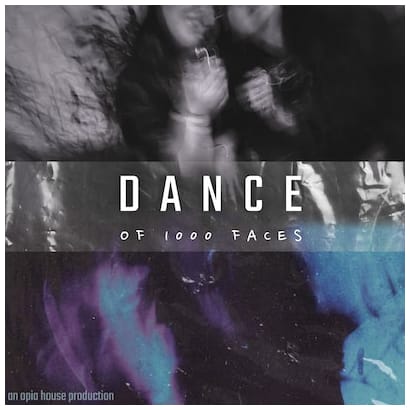
It’s been a quiet couple of years from Opia House. I last saw work from them in 2023, when I declared their show Feels Like Yesterday “most immersive” in my 2023 Denver Fringe Superlatives round up. The year before that, their show Saltmother was one of my picks for Denver’s top immersive performances in 2022, which left me wondering if I’d almost accidentally joined a cult. This year, their show Dance of 1000 Faces left no doubt in my mind: I had definitely been recruited for a cult.
What started as a simple dance party for me and a bunch of strangers quickly escalated into something more sinister. Led by two of the cult’s members and the leader himself, Charlie Suydam, we were taught throaty chants and participated in subtly foreboding rituals between a series of dance party break out sessions.
In those break out dance party moments, the audience went “off the rails,” free to move around and interact with anyone, anywhere in the room. I joined a conga line, made friends with a stranger, and listened in on an argument between cult members. Albert, one of Charlie’s followers, inscribed the phrase “Slumbering One” on my forearm for no apparent reason. I observed several of my fellow recruits led from the dance floor to a room on the mezzanine by a mysterious cult member who kept lingering in the shadows. I even got to speak one-on-one with Charlie himself about societal norms that plague me.
Things were happening everywhere all at once, but you had to pay attention to catch the details. The characters were drawn to the most curious recruits, engaging them most directly while letting the more timid ones linger on the peripherals. But they were receptive to us and ready to follow our lead, mirroring whatever we said and did.
Between all this, there was the nagging sensation that something wasn’t quite right. When Robin, another follower, burst into the room yelling about her missing friend, that was further validation that something strange was going on. Robin relentlessly pleaded for help, but Charlie didn’t seem to care. His attention was focused on locking us in by demonstrating his power.
The short, 40 minute experience came to an unexpected conclusion as the two cult members we’d been dancing and chanting with fell to the floor. Olivia, the cult’s social media manager, slit her throat on a livestream at the same moment that Charlie drove a knife into Albert’s stomach. Moments later they were both back on their feet, with blood streaming from their wounds, exclaiming to Charlie in disbelief that “It worked!”
But the magic was fragile and Robin needed to break it in order to save her missing friend. Those of us with inscriptions on our arms (about 2/3 of the audience) were instructed by Charlie to repeat them out loud over and over. At the same moment, the remaining third of the audience—those who had been led to the mezzanine by that mysterious member in the shadows—were instructed by Robin to perform hand gestures they’d been taught independently from the group.
When the group gestures successfully broke the seal to the outside world, Albert and Olivia fell to the ground again—dead for real this time—and we faced a choice on who to follow: Charlie or Robin, who both stormed out in different directions. Always drawn to the dark side, I exited after Charlie, who promised “ceaseless revelry” in exchange for loyalty to him & his plan.
Outside, he explained that his new paradise was nearly ready for us and placed wire-wrapped gemstones in our hands, encouraging us to use the stones as protection until we hear from him again. “I will find you when the time is right,” he said before running off into the distance.
Dance of 1000 Faces makes really great use of the unique venue space, so much so that it feels as though it was written for that exact room. The Truss House’s unfinished concrete floors and industrial architecture paired with low, colorful lighting and loud dance music created the perfect warehouse rave vibe. The venue’s mezzanine played a crucial role in providing an elevated vantage point for Charlie to watch over his followers, as well as housing the secret room for the secret hand gestures to be taught. And in the finale, as Robin and Charlie rushed out in opposite directions, the sets of doors on both sides of the room provided a beautiful symmetry to the performance that fit the story like a glove.
The venue is a critical part of this show’s success, but so is the cast that brings it all to life. Several members of this Opia House team (Leah Cardenas as Robin; Quinn Leary as Charlie; Beau Fisher as Albert) overlap with some of the cast & crew of Site 2, an extreme horror experience from Paralysis that I participated in this past spring. It was fun to see this talented crew in a tamer production, although I suppose many would say watching a live cult sacrifice is still pretty far on the extreme spectrum.
I’m not awarding Fringe Superlatives this year, but if I was, Opia House would get “most immersive” again. While the clowns I previously discussed are stretching the boundaries and reimagining what immersive can be, Cardenas and her team have already nailed the formula for what immersive should be. They don’t just produce shows; they create experiences with the audience at the center of the story.
One of Us Becomes God
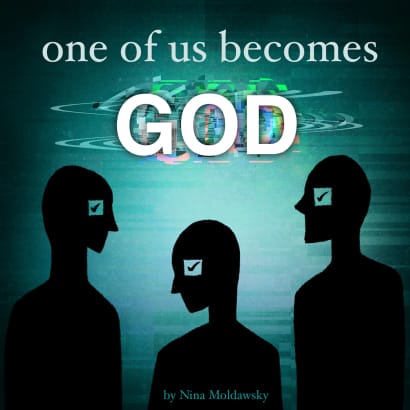
The Experience Institute believes not only that you should know what happens to you after you die, but that you should have a choice. Every 20 years, the institute elects a new God based on their approach to life after death, and that was the purpose of our gathering: to cast a vote for the next president of the afterlife.
With an audience of ~30 people seated in three groups, each of three candidates spent 10 minutes with a group before rotating to the next one. After a brief explanation of how things would work in their afterlife, the remaining time was given to our groups to ask clarifying questions to better understand the candidate’s vision.
These highly engaging, improvised sessions are the hallmark of a great immersive experience, this one inviting us to take an active role in imagining our own mortality. This was not surface-level engagement; we were casting a vote for something that mattered to us personally, and had a lot of learning to do in a short amount of time to make an informed decision.
My group asked each candidate questions about their specific approach to designing the afterlife and how they would govern it, which they all handled with ease and grace. But when we tried to draw comparisons to the other candidates—whose afterlife they wouldn't want to live in, for example—we were met with some hesitance and received the kind of vague, non-answers you’d expect from more traditional politicians.
The second half of the show moved into a debate. Once again, we were in control as each of our groups deliberated on a question to ask all three candidates who stood before us at the front of the room.
It is here that the interpersonal relationships between the candidates start to emerge as they become highly emotional and even defensive. They give up on decorum while debating each others’ answers to our questions. They attempt to sway our decisions by disparaging their opponent’s character and motivation for running for the position.
This show left me with some FOMO, and that’s not necessarily a bad thing. It’s another sign of an effective immersive experience, because so much of what you learn, see and hear from the characters is dependent on the choices made by the audience. The questions we ask inform our experience, and no two audiences will ask the same questions, therefore delivering a unique outcome each time, and even from group to group as we interview the candidates.
One of Us Becomes God has a unique format that keeps us seated, yet centered in the action as we gather to participate in this innovative act of mortal democracy. The first half gives everyone their fair share of opportunity to engage directly with the candidates, while the debate in the second half is full of drama and chaos as the interpersonal relationships between characters begin to crystalize.
We voted openly and visibly, dropping a marble in the jar of our chosen candidate as they each made a lap around the room. This was an uncomfortable moment, as I chose to vote for the afterlife most appealing to me, even though its champion was the candidate whose motivations had just been exposed as questionable at best. I received questions from my group about why I made that choice, while one woman audibly chided her partner for voting against the grain as I had done.
Nina Moldawsky’s 2025 Fringe piece Voices In My Head had a novel concept and format where we, the audience, got the opportunity to pause time, have a discussion with, and ultimately make decisions for the main character navigating an awkward social interaction. One of Us Becomes God was more formulaic, but still gave us a lot of agency in what happened. It also gives us an idea to play with that is both relatable (What happens when we die?) and absurd (What if we get to choose?) so that we are anchored in something familiar while given the ability to poke at it with a magic stick.
Discover the latest immersive events, festivals, workshops, and more at our new site EVERYTHING IMMERSIVE, home of NoPro’s show listings.
NoPro is a labor of love made possible by our backers. Join them today and get access to our Newsletter and Discord!
In addition to the No Proscenium website and our podcast, and you can find NoPro on Bluesky, Facebook, LinkedIn, YouTube, Instagram, and in the Facebook community also named Everything Immersive.


Discussion