



How do you create a truly replayable escape room experience? How can choice meaningfully impact game design, story, and player agency within the framework of an escape room?
Doors of Divergence, now remounted in Charlotte, NC following a critically-acclaimed run at its original location in Brooklyn, NY, is tackling these questions by pushing the boundaries at the intersection of escape rooms, immersive theater, and replayable narratives. Their two current rooms, Heresy: 1897 and Madness: 1917, are cleverly constructed to empower players to make decisions leading to wildly different stories and outcomes, appropriate for both a one-off visit or dedicated repeat players looking to discover the consequences of decisions not made during previous outings.
The tone of our journey was set immediately as we entered the lobby, a welcoming space tended by a friendly, knowledgeable barkeep holding court over a custom bar containing copies of Myst, The Hardy Boys series, and Choose Your Own Adventure books, clear inspirations for the storyworld and mechanics at the heart of Doors of Divergence. Against the backdrop of a most-appropriate soundtrack - familiar hit songs covered in genres outside of their own times - our barkeep provided the most personal, engaging, and creatively-realized escape room onboarding I've ever experienced, introducing our team to the storyworld and game rules through a fun tarot card presentation in an intimate setting on par with top-tier standalone immersive theater productions.
Our visit consisted of one playthrough of each of the two current rooms. The second room - Madness: 1917 - was the highlight of our visit, a world-class escape room combining a compelling narrative, two (!!) talented live performers who stayed with us throughout our entire time, fantastic production design, satisfying and original puzzles, and some end game choices leading to a memorable conclusion with our team right in the center of the drama. The actors were incredible, shifting effortlessly between delivering scripted story beats and improvising fun character dialogue when prompted - truly a highlight of our time in jail (did I mention we were in holding cells in a decaying mental institution?). For anyone with even a remote interest in escape rooms, Madness: 1917 is not to be missed.
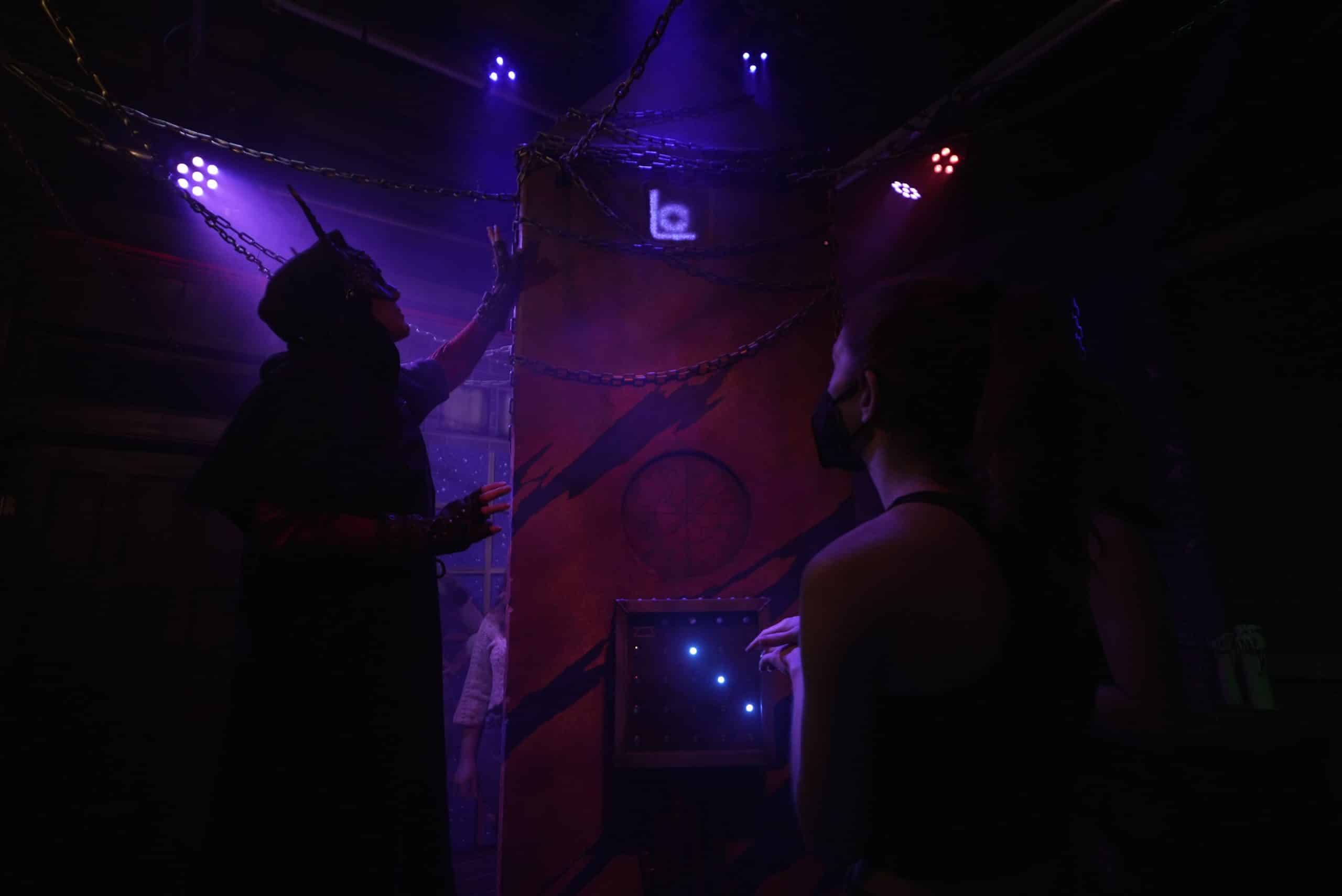
Within these rooms, the impact of the character actors cannot be overstated in regards to setting the tone and heightening the interactive and narrative aspects of the gameplay, something that was in stark contrast between our two room sessions.
For us, the first room, Heresy: 1897, started with a weird interaction that it never fully recovered from. At the top of the show, our guiding in-room actor presented a series of three questions through a tarot reading that would determine our path for the rest of our experience. Our actor unfortunately seemed to trip on the script, asking the same question twice, as both their second and third inquiry. When we asked for clarification, the actor simply pushed onward, listing two answers to choose from that did not match the repeat question. In this confusing moment there was also an electrical issue, resulting in locked panels on the wall suddenly popping open with late-game reveals. Our friendly barkeep rushed in to escort us back where we came from while the staff fully reset the room for a fresh start. After several minutes we restarted the room with no popped panels and three distinct tarot questions from our guiding actor.
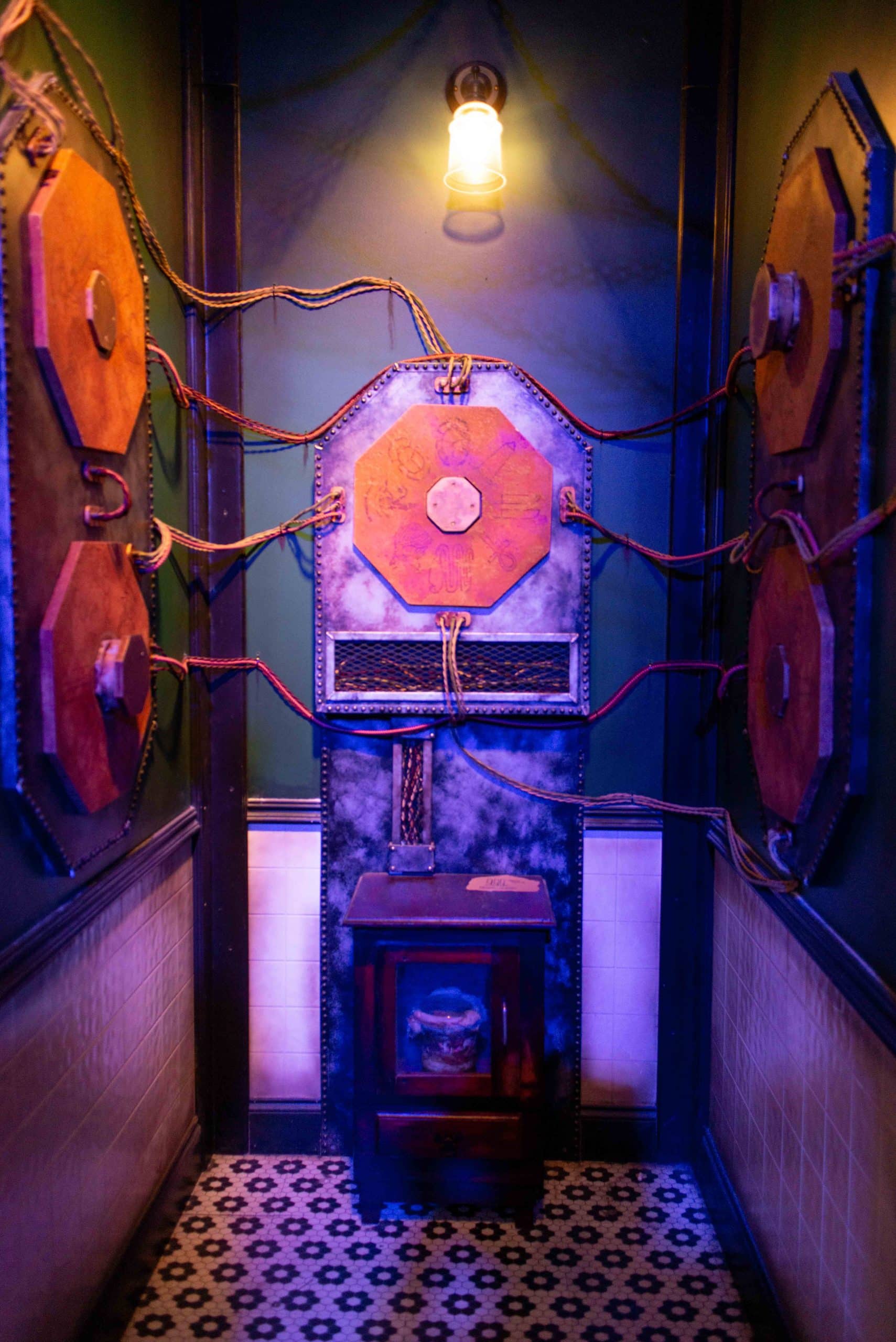
The rest of our time with Heresy: 1897 featured great production design, thoughtful puzzles, and a fun final decision that would impact our setup for Madness: 1917. Sadly, when we saw our in-world character performer they seemed frazzled and more preoccupied with resetting room elements we had already completed than engaging with us in any form, which pulled us out of the storyworld, doubly so after our disorienting onboarding. Aside from the performer and unfortunate electrical glitch (two very adjustable elements we hope will be less pronounced in the future through performer training and electrical revisions), the room itself was an easy recommendation, especially as a warm-up to the highs of Madness: 1917.
It is clear Doors of Divergence is designing for the long run, building the groundwork to become the standard bearer for replayable escape room experiences. At the end of each room players return to the lobby bar and are presented a set of collectable cards representing choices big (did you trust or betray a character?) and small (did you put on that outfit that you found?). Each card has a unique code word and a URL to a website that doesn't exist yet called The Rift. Eventually, guests will be able to take their cards and log their experiences in a chart of all possibilities, placing just as much power in seeing the choices you didn't make next to those you did. Guests can purchase a binder to store their cards, and an app is in development for tracking on the go. It's the first time I've seen escape room choices manifested as collectible items, and is a clever approach to building a repeat dedicated player base and a community invested in exploring every narrative corner of the Doors of Divergence universe.
A third room is in the works, building even further upon the foundations laid by Heresy: 1897 and Madness: 1917, and here's hoping this is only the next step in a much larger game plan for Doors of Divergence as they continue to elevate the escape room experience through an replayable lens of choices and consequences.
Doors of Divergence books seven days a week in Charlotte, NC; starting at $60 per person, per chapter.
Discover the latest immersive events, festivals, workshops, and more at our new site EVERYTHING IMMERSIVE, home of NoPro’s show listings.
NoPro is a labor of love made possible by our backers. Join them today and get access to our Newsletter and Discord!
In addition to the No Proscenium website and our podcast, and you can find NoPro on Bluesky, Facebook, LinkedIn, YouTube, Instagram, and in the Facebook community also named Everything Immersive.


Discussion