



Radiohead puts up some large scale installation art, a LARP with a The Boys meets V for Vendetta flavor, and an opportunity to step inside the Black Mirror.
Is there a uniquely British spelling of dystopia, because this week's lineup has that vibe. Luckily there's a (virtual) trip to Machu Picchu as a kind of palette cleanser. Then again, some of us like our dystopia with an English accent. Maker knows, I'd hit up all of these this week if I can just get this dimensional rift working.
–Noah J. Nelson, Publisher
NoPro is 100% reader & listener supported. Support our work by becoming a subscriber, which comes with access to our newsletter & Discord, or drop a one-time gift in the Tip Jar of any amount to share your love of immersive experiences.
Want more? Check out our most recent edition and our REVIEWS section.
Check out our How To Get Covered By NoPro guide to submit your events & experiences for review. Want the opportunity to get your work listed in our newsletter & socials? Submit a listing to Everything Immersive.
Black Mirror Experience (New York City)

Univrse
The Shed, Manhattan; $56-$67; June 20th through September 6th
Black Mirror now has a VR experience where you get to participate in one of its dystopian imaginings. And while the Black Mirror Experience lacks the complexity of the show’s strongest work, it captures some of the spirit of the series and showcases some good, if not quite cutting-edge, room-scale virtual immersive tech.
The Shed’s Black Mirror Experience is not so much a Black Mirror episode than a Black Mirror-themed dark ride. The beginning of the experience, set in a faux consumer technology store for a new AI-based product, is very well executed in the spirit of the series, but you are not getting a complex troubling story at the level of The Entire History of You or San Junipero. Instead, the third act pivots in an action sequence of VR laser mazes and shooting galleries.The ending hits a predictable but well executed dark place regarding AI and deepfakes, but overall, set your expectations more to a fun game with some dark comedy to meet the piece at its level.
The showstealer is the room-scale VR. About a third of the way through the story, you diegetically don a VR headset and the rest of the piece takes place virtually. You are able to walk around the room and see the other audience members and that’s where the technology here shines. While it looks like the entire room is having the same experience you are, in fact you are seeing unique visuals and hearing specifically targeted audio. That works remarkably effectively – at moments, everyone sees a different walkway and naturally moves to a different part of the room; at others, the entire audience speaks to a screen and then the screen answers only what you individually said. My only note on the technology is that contemporary VR often uses mixed-reality objects to create tactile experience. For example, if you press a button in an MR experience, there’s a physical button you hit as you slam the digital one. Given much modern room-scale VR works this way, it’s a bit jarring that Black Mirror Experience is pure VR piece with no tactile elements.
But this is inside VR baseball. For most users who have never done room-scale VR, the Black Mirror Experience is solid - a fun on-brand romp that takes on an appropriate dark technology and does some clever things with individual experience. It’s not high art, but it’s worth the ride.
— Nicholas Fortugno, New York Correspondent
Machu Picchu: Journey to the Lost City (Denver & Other Cities)
Fever & Virtual Worlds
$30-$36 for an adult ticket; 16 total locations globally; ongoing
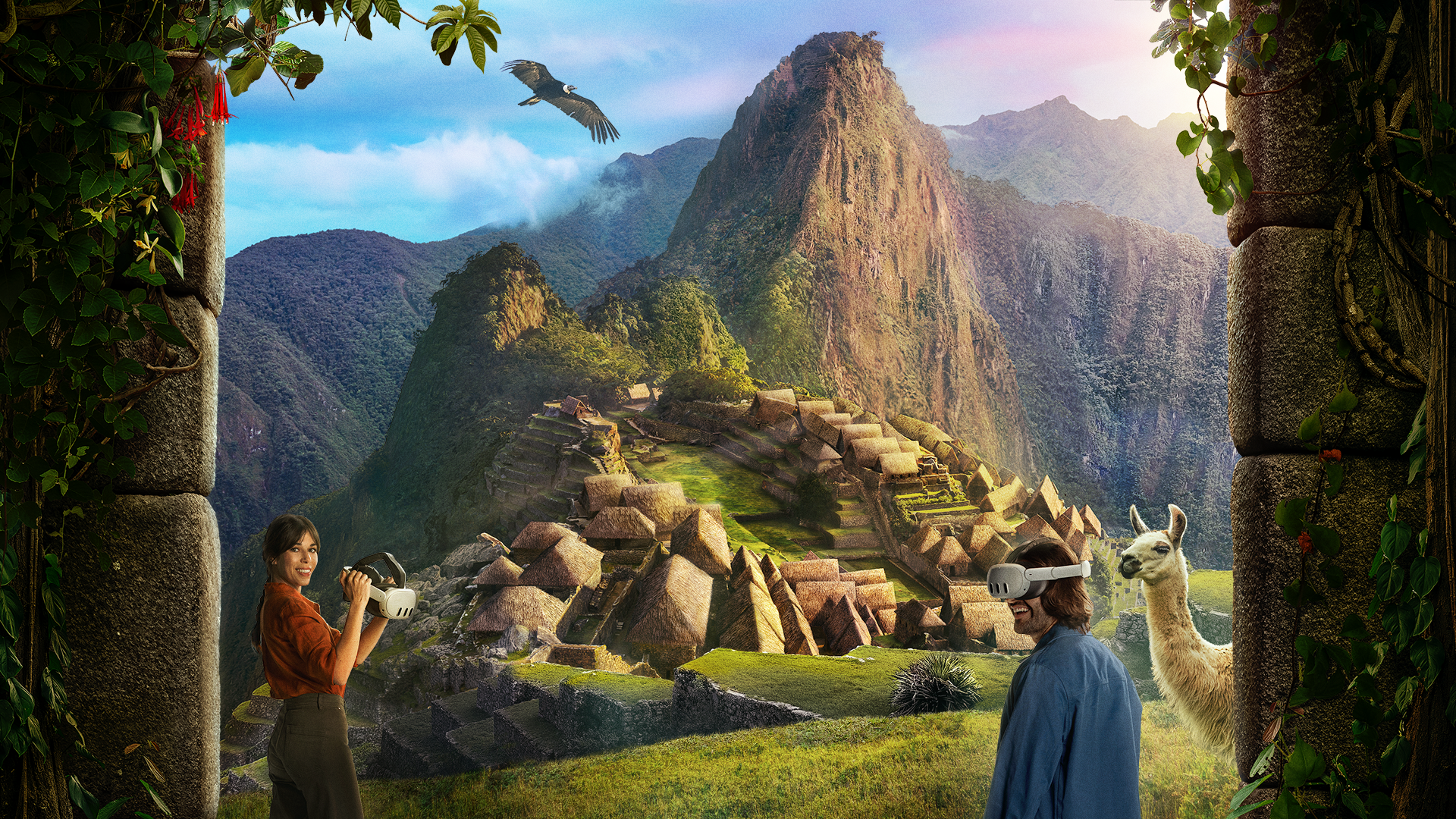
In January, I loved Fever’s Horizon of Khufu: Journey in Ancient Egypt VR experience that put me at the base of the 450-foot-tall pyramid, then had me floating around inside of it. So I was excited when they brought Machu Picchu: Journey to the Lost City to the same location.
Both experiences are produced by Fever, but with different creative partners: Excurio for Khufu and Virtual Worlds for Machu Picchu. Both follow a similar concept that's easy to grasp: you’re there for a guided tour of a magnificent historical landmark. They both even have a cute animal friend who tags along for the tour.
But in Machu Picchu, the tour guide is a pun-loving robot who floats around and flies through the air. I liked this tour guide, TERI, a lot less than the human, Mona, who guided me through Khufu. Mona was funnier and more personable than TERI the robot.
Just as I pointed out in my Khufu review, these experiences are perfect examples of what VR edutainment can and should be. They simulate what it’s like visiting the place in real life, then use the magic of technology to teleport you through the space or populate it with the indigenous people who once lived there.
The best use of that magic was seeing Machu Picchu at night, lit by the moon with stars shining bright overhead, since you cannot be at the real site past 5:30 p.m. That also meant we got to view the sunrise at Temple of the Sun, where, on the summer solstice, the first rays of the sun shine through one window to illuminate a ceremonial stone altar inside.
The tour around the historical site of Machu Picchu was interesting, informational, and visually striking. It was fun to roam around the place and take in the sights and visual effects of the VR. But the ending leaned into Inca mythology a bit too much, leaving us in a precarious situation surrounded by scary flying creatures that some kids might find frightening. I thought the effect was cool, but it felt disjointed from the overall vibe of the experience.
Machu Picchu is a great value at $30–$36 per person for a 40-minute experience that I’d recommend to anyone who likes VR. If you can only do one, let it be Horizon of Khufu. But if you have time to do both, you should!
— Danielle Riha, Denver Correspondent
Radiohead Motion Picture House (New York City)
Radiohead & [namethemachine]
Starting at $50; Agger Fish Building, Brooklyn, NY; Through July 12 then Touring
This summer the Radiohead Motion Picture House joined the ranks of NYC’s watch parties.
The experience is split into two parts: a pre-show, exploratory gallery and a music video film displayed on large-format LED screens with surround sound.
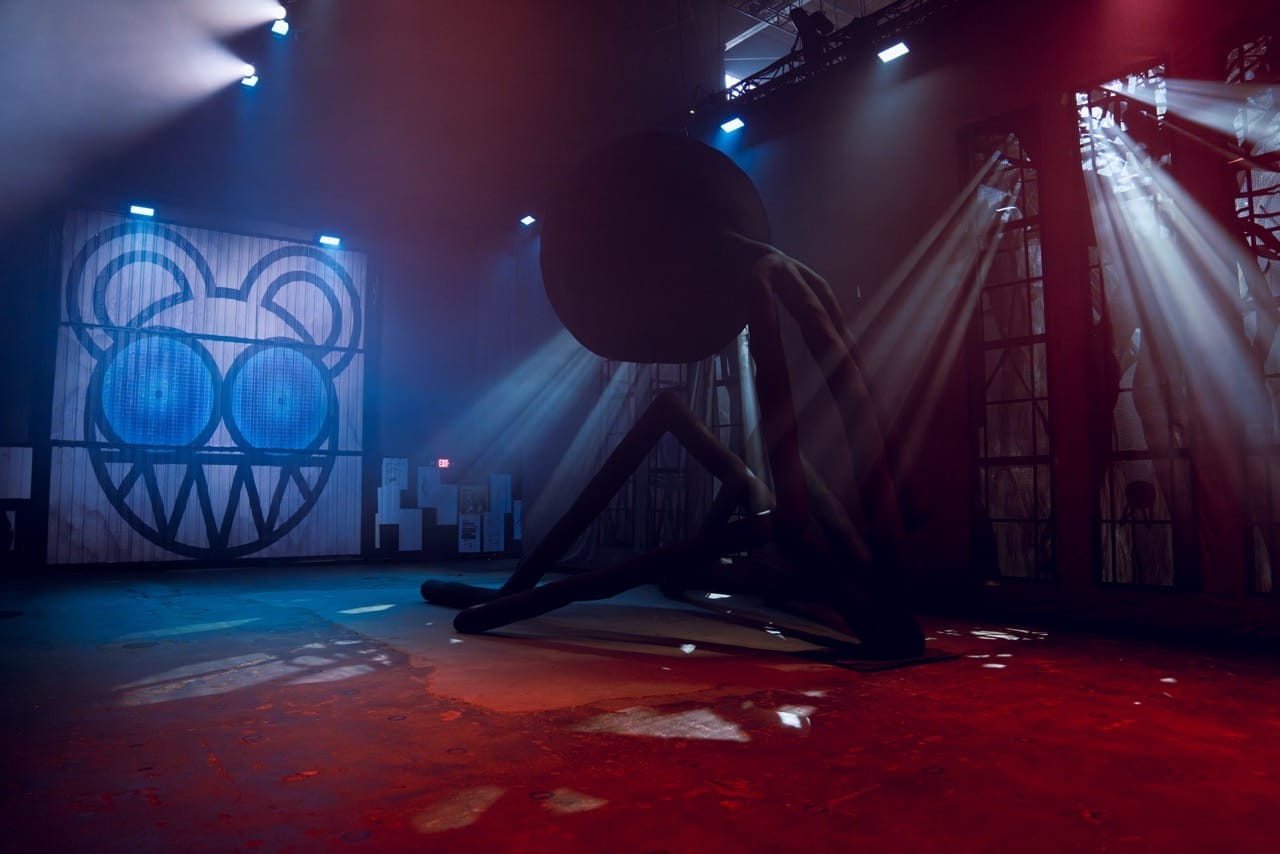
The walk-through portion featured a multimedia display of pieces ranging from wheat-pasted posters to sculpture to video design to lighting installations, depicting recurring motifs of scribbled figures, the band’s iconic Crying Minotaur and Modified Bear creatures, and what looked like heavily annotated lyrics from the albums in question.
If I were a true Radiohead fan, I bet I would have had a field day hunting for allusions and easter eggs. Instead, I had to content myself with enjoying the pieces on a formal basis.
Luckily for me, the gallery held its fair share of surprises, including a massive (I’m talking like twenty-five feet) stick figure bent over with his head in his hands. Behind it, a series of scrims shadowed a flickering forest through a small window. Each layer of scrim depicted a different layer of trees intermittently illuminated by stormy lighting effects. It was quite lovely in its own grungy way.
The film began thirty minutes after the gallery opened. We were led into a room with a sort of raised 70s-era conversation pit in the center, filled with pillows and padded flooring. We made ourselves comfortable and waited for the film to begin.
What followed was an extended maze-like journey of the Crying Minotaur character making his way through a series of forlorn, psychedelic spaces. I can’t tell narratively if it was an odyssey or an exodus, though I don’t think that matters.
The music was loud and shook the seating. I even speculated that the designers kept the basses underneath the seating to give a tactile experience to the tunes, which I liked, and even wish they’d pushed a bit more aggressively. Perhaps my biggest immersive critique, however, is that the content was the same across the four screens, meaning there were no bad angles, but also that they perhaps missed an opportunity for interesting 360-degree visuals.
Watching the rest of the audience, seemingly composed of real Radiohead fans, smiling and mouthing the lyrics to themselves, I was reminded of the same simple truth that the Knicks’ and World Cup watch parties reminded New York: It’s more fun to experience a work of art together.
– Alec Zbornak, NYC Correspondent
Valour Manor (UK)
Omen Star
£400; Ingestrehall, United Kingdom; May 28 to 31st 2026 and August 19th to 22nd 2027
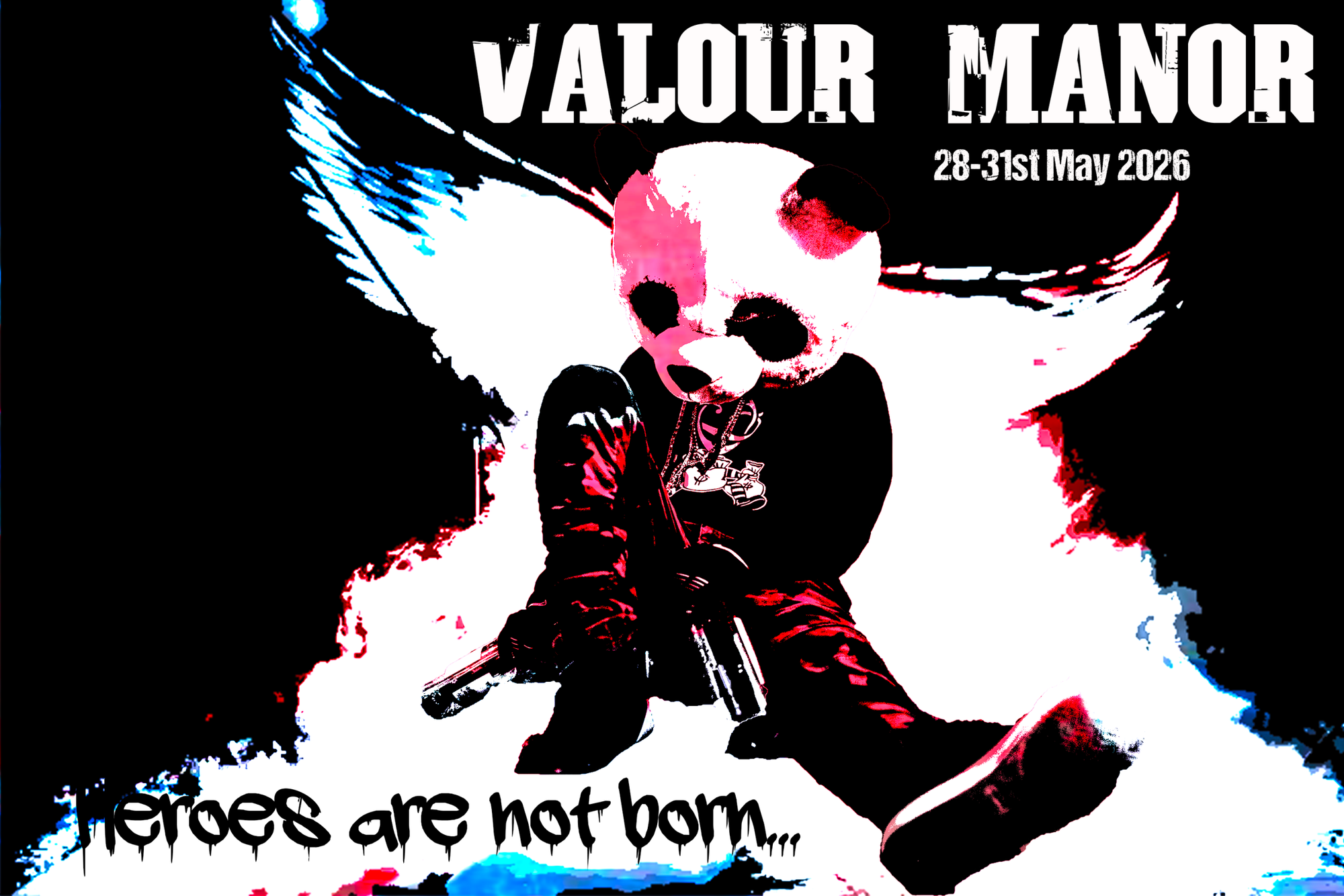
Valour Manor is a blockbuster LARP set in a The Boys-like universe of pharmaceutically created superheroes under the control of a ruthless corporation. Players are all subjects of this experiment or children of those who took the serum. They have been placed in a school to train them for service, resulting in either graduation or elimination. From this foundation, Omen Star has created an excellent exploration of oppression and how it scars victims and perpetrators alike.
A blockbuster LARP on a strong theme is a tricky needle to thread, but Omen Star does a terrific job of delivering their message without limiting player creativity. The physical setting is perfect; Ingestrehall is about the most X-men-mansion looking estate you could imagine. Characters are wisely organized into groups, meaning that players have a tight clique of 4 to 8 classmates they have lived with for at least a year. That ensures some connections for every player individually and makes the game a deep social world to explore. At a basic LARP organization level, Valour Manor is successful on every front..
Where the game shines is structurally. A series of workshops establish the theme of oppression through a powerful embodied experience of the nature of victimhood and violence and make clear the heavy stakes of the storyworld. However as a LARP begins, you sink into the role of a student and get can easily caught up in all of your school and personal drama. Omen Star is a very player-centric troupe, so they will run with your requests and tailor the game to your needs. But the theme has not been forgotten and comes home in a striking finale. This means that the game is a deliberate dodge: you are told the theme at the beginning and then allowed to LARP away from it towards your own whims, only to have the message ambush you at the end. It’s a brilliant system that lets Omen Star create a truly player-driven LARP without losing control of their vision.
LARP is a form that continues to evolve and expand into deep themes and more complex structures. In that space, Omen Star continue to be a group to watch for cutting edge storytelling and interactive creation. A third run of Valour Manor is coming in August 2027, and if you’re looking to see what blockbuster LARP can be, this is a great piece to experience.
— Nicholas Fortugno, New York Correspondent
Discover the latest immersive events, festivals, workshops, and more at our new site EVERYTHING IMMERSIVE, home of NoPro’s show listings.
NoPro is a labor of love made possible by our backers. Join them today and get access to our Newsletter and Discord!
In addition to the No Proscenium website and our podcast, and you can find NoPro on Bluesky, Facebook, LinkedIn, YouTube, Instagram, and in the Facebook community also named Everything Immersive.


Discussion