


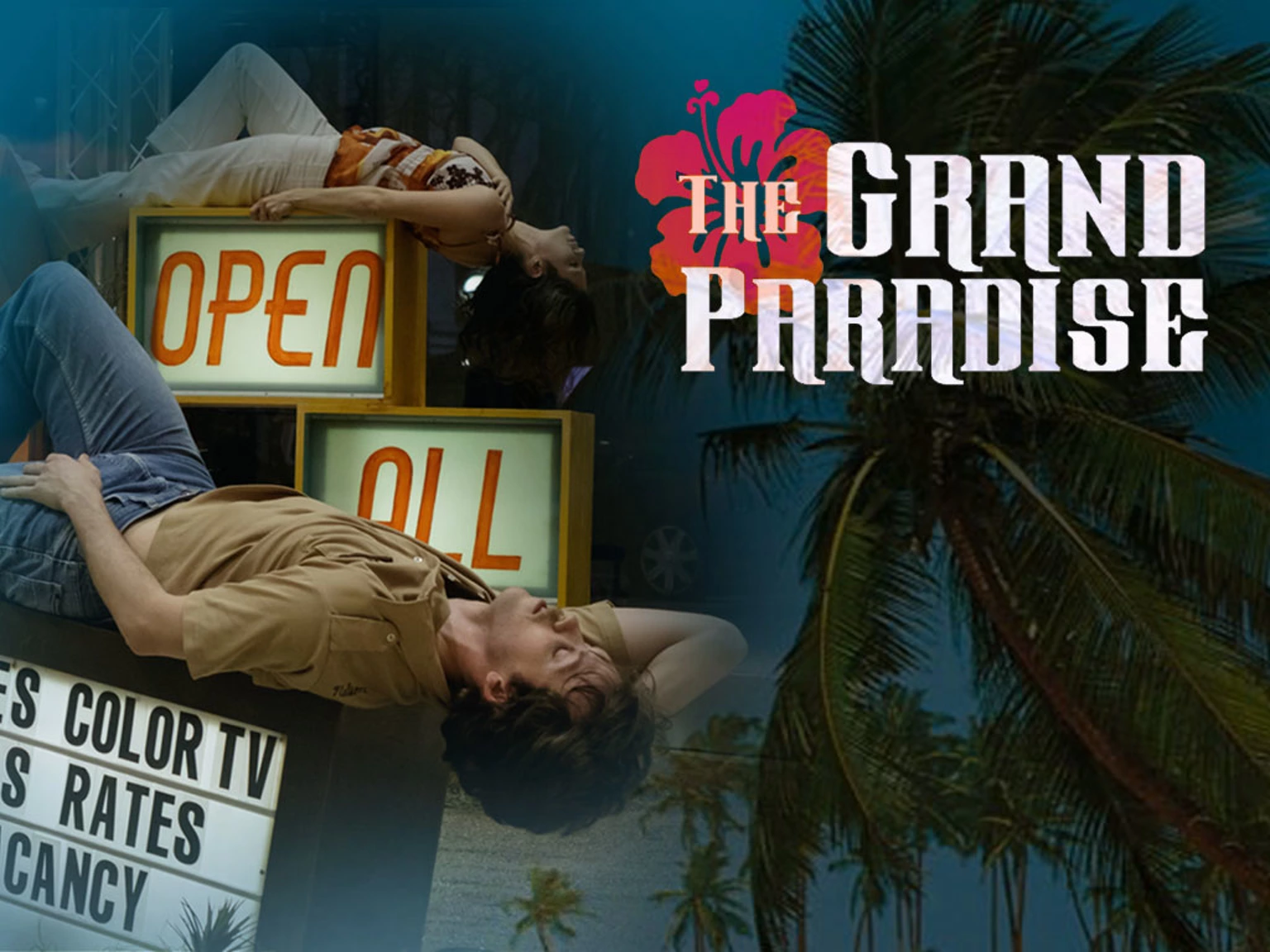
New York’s Third Rail Projects last large-scale immersive theater piece, Then She Fell, is still running after over 1,000 performances. Its unique evocation of liminal space through dance and intimate encounters and its subversive use of the iconography and historical context of Alice in Wonderland have made it one of the great successes of live performance in recent years. Now they’ve got a new piece that takes the form of a vacation to a nostalgic 70’s resort.
The Grand Paradise is a beautiful, entertaining, challenging, flawed, essential piece of contemporary American performance. Its commitment to its own form has pulled the center of gravity for immersive work in New York toward itself, and if you have any interest in theater, dance, installation art, devised work, or physical theater, you should go see it. You should also go see it if you dig dancers that glow with 70’s charisma doing sexy things for compelling reasons.
Either way, go see it. It’s good.
But all of that is easy to say. Those are the sorts of superlatives folks like to use when they dig something. But why do I think it’s good?
And while we’re asking why, why is it that so many reviewers see such different versions of the piece? Why is it that some reviewers claim The Grand Paradise is a richly evocative meditation on love and death, while some found it charmingly superficial — some found it transformative and transporting and some were bored when they weren’t getting into a pillow fight. Why did some find the environment funny and escapist, while some found in it intimate rituals of themed eroticism, while others found it underdesigned and underwritten — and some aren’t convinced it’s theater at all?
This last question — is The Grand Paradise theater? — makes sense, given the convergent nature of immersive theater. Part of immersive theater’s intermittent mass appeal stems from the strange way practitioners from different traditions have ended up in something that looks like the same form.
If you dropped someone into Sleep No More with zero context would they come away thinking they’ve seen “theater”? Antonin Artaud and his lineage aside, folks generally think of theater as a play with an audience and dialogue, poetically expressed themes, backstories, dynamic characters and action rising to a climax that resolves these components into a dramatic statement. None of these things occur in Sleep No More. There’s no dialogue, the scenes are movement pieces, its language is in set design, bodies in movement, and evocative tableaux — in other words, it’s dance — even though the Punchdrunk lineage flows from script-based theatre.
All of which is to say it’s up for debate what the effective critical tools for piecing together The Grand Paradise might be. If you try to understand The Grand Paradise in terms of text-based narrative theater you’re going to do fatal damage to the spirit in which it is offered, but if you try to understand it strictly in the language of dance, you may lose the hazy edges of the piece.
So instead of putting Artaud aside, let’s bring the charming, iconoclastic, tragic fellow into the conversation. As you know, one of Artaud’s notions was that the stage image, the mise en scene, not the text, should be the primary communicator of ideas in theater. Choreographers and movement-based directors understand this well — ideas can be communicated in startlingly clear ways through movement, and not only mime, but through abstract movements. The same is true of everything else on the stage. That language — the language of mise en scene created through dance and scenic design — is the language of Third Rail Projects.
Get Zay Amsbury’s stories in your inbox
Join Medium for free to get updates from this writer.
SubscribeSubscribe
Another layer here is that immersive theater experiences like The Grand Paradise will always be incomplete — that’s a trope of the form. The setting of The Grand Paradise is nominally a resort in the 70’s. The characters are folks on vacation and the workers and performers at the resort. Some things happen. You’ll never know exactly what. That’s not an error, that’s not a mistake — it’s a tool of immersive theater. It may not be your deal, but looking for a complete, traditional story in immersive work will only lead to frustration and a confusion of form.
What the The Grand Paradise offers to each audience member is an experience of images and scenes built out of dance, ritualized language and interactions, song, and scenic design that will always be both complete and incomplete. You can never get a comprehensive view of The Grand Paradise, but your individual experience is what the comprehensive view feels like. We won’t find the meaning of the piece by “putting it all together.” We will find it in the cumulative effect — in our own feeling of moving through the space, and in the way what we’re experiencing evokes themes and ideas.
In The Grand Paradise there is something lurking beneath the images and characters around us, something whose shape will never be clearly defined, but something that is there, and that its presence can be felt without full articulation is what I mean when I say that the piece is good. It wields what Artaud calls “metaphysics-in-action” with a sure hand, an intimate touch, and a dangerous glint behind the sexy glance.
Because the spoiler is this: The Grand Paradise isn’t “about” a 70’s resort any more than Then She Fell is “about” Alice in Wonderland. Then She Fell uses the characters and historical context associated with Alice to evoke ideas and themes that become so intensely present they overwhelm the surface of what you’re seeing. In other words the feeling created by the mise en scene becomes more powerful than the mise en scene itself. That’s what creates the famous Then She Fell liminal state, a state that returns in The Grand Paradise.
But in The Grand Paradise the degree of difficulty is much higher. The familiar images of Alice in Wonderland helped us to let go of worrying what the story is, or where it’s going. They create a container for us to explore, and relieve the anxiety of trying to put it all together, even as a dastardly sleight of hand fills those images with another set of meanings and ideas altogether.
The Grand Paradise has no such container. Like Then She Fell, the characters, setting, and events are all pointing to something else, some mystery, some set of ideas, some haunting or yearning or lustful or murderous force, something like death, lurking behind everything you can see and experience — and they achieve that effect without a safety net.
That’s what I mean when I say it’s good. The metaphysic of the piece overwhelms the experiences themselves. It begins to feel as if when you’re watching a character, that character is not there any more than the resort is there. You’re in a living breathing metaphor that you can reach out and touch, that can reach out and touch you, even though its skin glows with ideas and evocations. What you think you’re seeing is not what is happening. None of it’s happening. But it is happening, surely, all around you, all the time.
If all you get of The Grand Paradise is beautiful dancers and fun incidents and interactions then you’ll certainly come away from it with a sense that it is charmingly superficial — but you’ll be missing out on its secrets.
And if you don’t believe The Grand Paradise has secrets, just go check out the original name of the piece, and wonder how deeply buried in the movements and characters and design that theme might be.
I’ll offer another clue. There’s a pointer for the piece that you can discover in the holding area, before you go into the main performing space. It’s hidden in plain sight. I promise that you’re close to it while you’re in there, and you can find it if you look. If I hadn’t seen The Grand Paradise alone I might never have found it. It’s so specific that as the evening progressed I kept expecting that the secret would be revealed, or played with, or inverted, or in some way danced with — and it is, in subtle ways, but in the end, The Grand Paradise doesn’t quite tip its hat.
Which is where all the superlatives come from in the first paragraph. The Grand Paradise has the courage of its convictions. It uses the language of dance, scenic design, music, song, and intimate interactions to create a beautiful image. And while it never fully reveals what is behind the image, that lurking presence is the very substance of what you’re experiencing.
It’s good. Go see it.


Discussion