



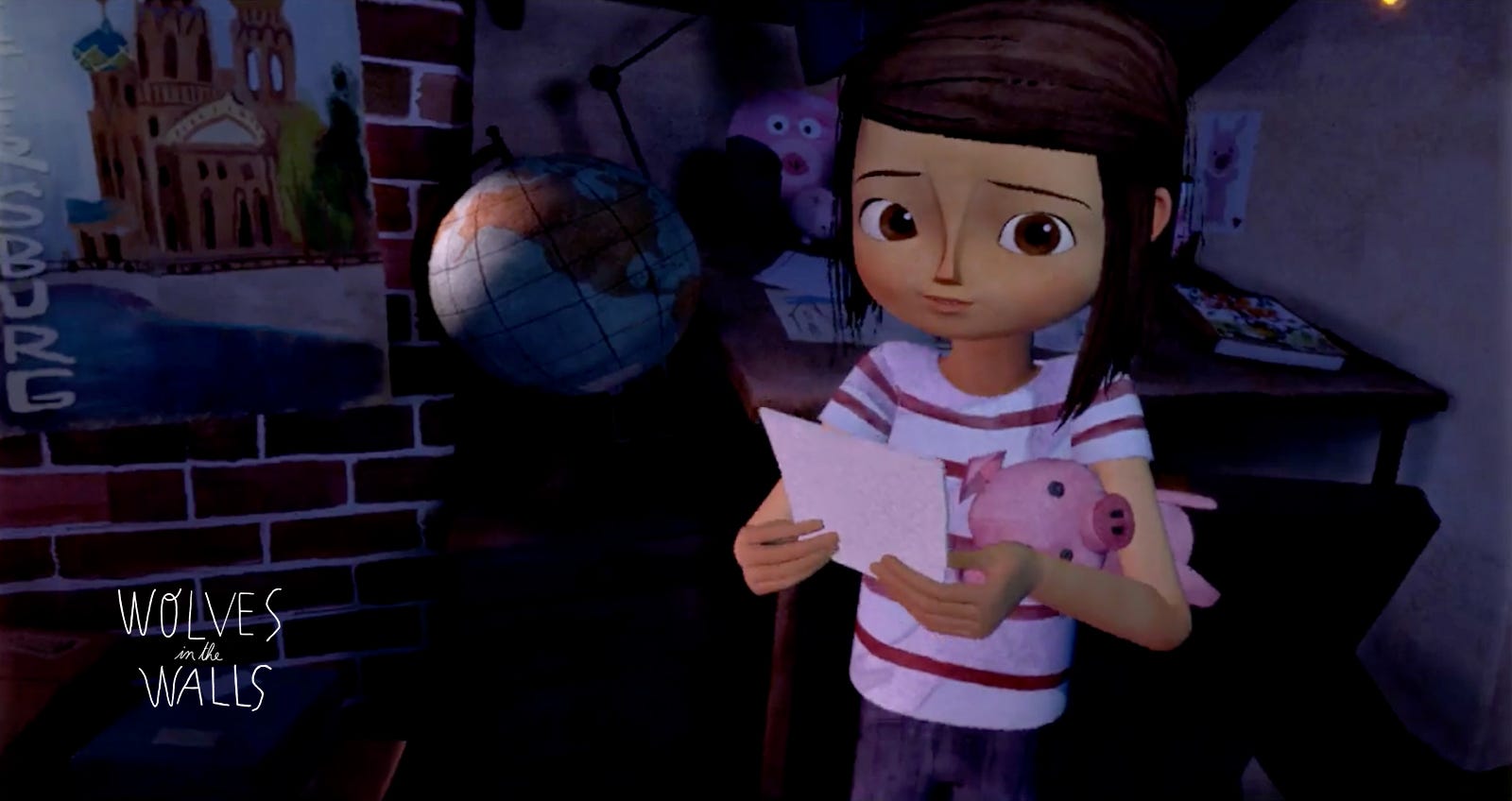
I start off with no hands. I’m also standing at the wrong height.
Eight year old Lucy has drawn me too tall and I’m now towering over her. I’m instantly drawn to her big, brown amimated eyes.
She starts over and draws me again, shorter; now I can see eye to eye with her. I see things from her perspective.
And yet, I can’t interact with her world, not just yet, because I’ve got no hands.
She realizes this and quickly draws me two chalk hands. Suddenly, my VR controllers work. I can pick things up. I can interact with objects. I’m “real.” In this world, I’m Lucy’s imaginary friend. We’re in her attic, searching for clues, for proof of the monsters that live in the walls of her home.
Listening carefully, I can hear ominous scratching behind the wood panels.
It’s the wolves!
This is Wolves in the Walls, Fable’s charming VR adaptation of Neil Gaiman and Dave McKean’s novel, created with immersive theatre company Third Rail Projects. Chapter one premiered at Sundance in early 2018; audiences at Tribeca Immersive now have the opportunity to experience both chapters as one seamless experience with It’s All Over. And the work comes to life at Tribeca’s Virtual Arcade with the help of Third Rail Projects, as viewers enter a set made up to look like a cluttered attic — filled with bric-a-brac and complete with Lucy’s scrawlings on the walls.
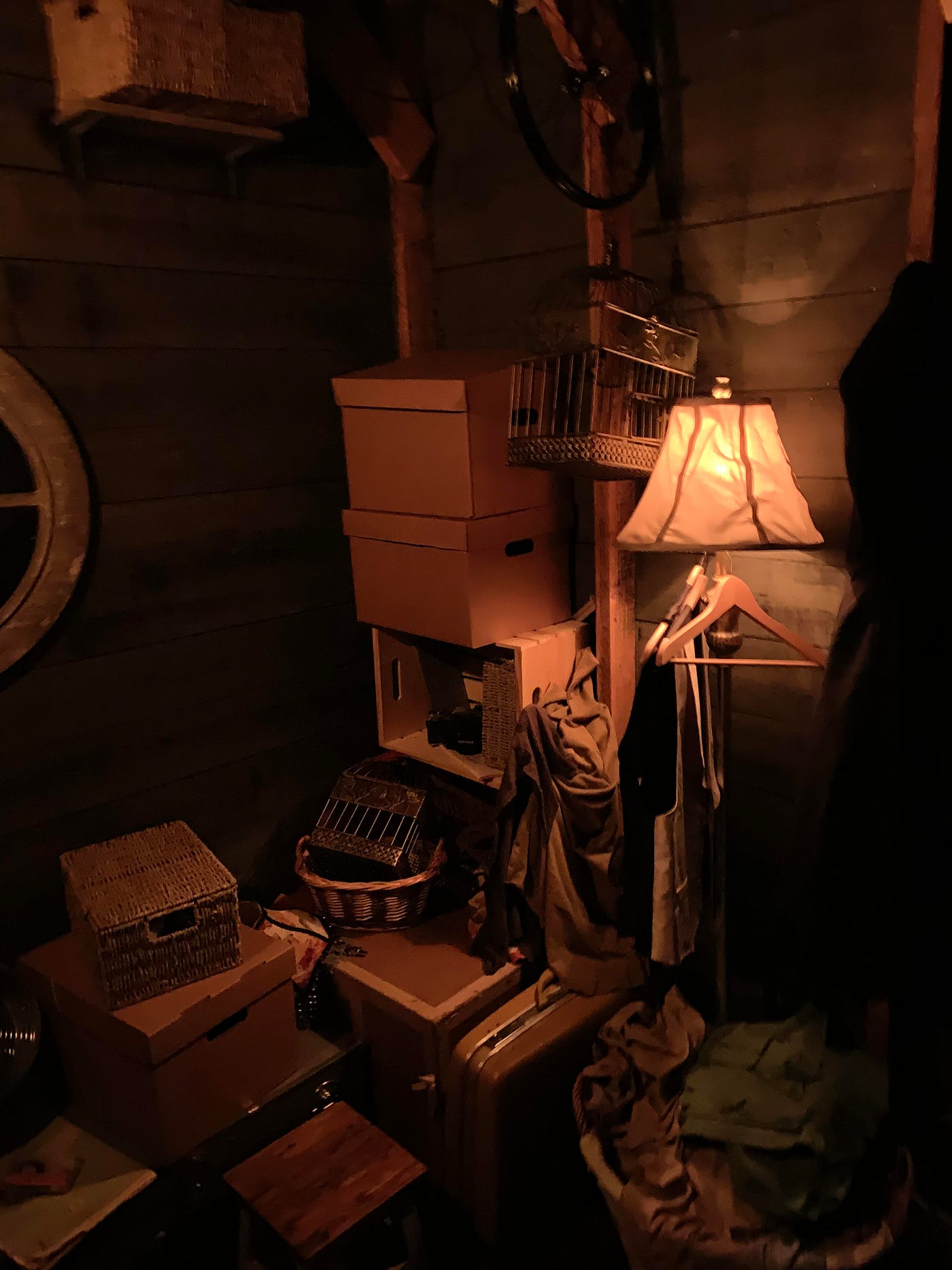
The festival’s onboarding experience is also memorable: it begins with an immersive actor opening up a box filled with junk together with the participant. (For me, the part was played by Third Rail Projects veteran Elizabeth Careena, who both plays the mother in Wolves and sings the hauntingly beautiful folk song that plays over the credits.) We search for something among VHS tapes and cassette tapes and Viewmasters and other retro paraphernalia. Ah! Found it! The VR controllers. She places them in my hands before putting on the Oculus headset.
Get Kathryn Yu’s stories in your inbox
Join Medium for free to get updates from this writer.
SubscribeSubscribe
Wolves in the Walls originally began as an Oculus Story Studio project (the same folks who brought us Henry and Dear Angelica) and when the Studio dissolved, the creators continued onwards and founded Fable Studios, now known as simply Fable. With Wolves, and the development of Lucy, Fable have reframed themselves as a virtual beings company. And whether or not you believe that interacting regularly with actors within VR is going to happen in our near future, it seems nearly certain that interacting with virtual beings like Lucy is.
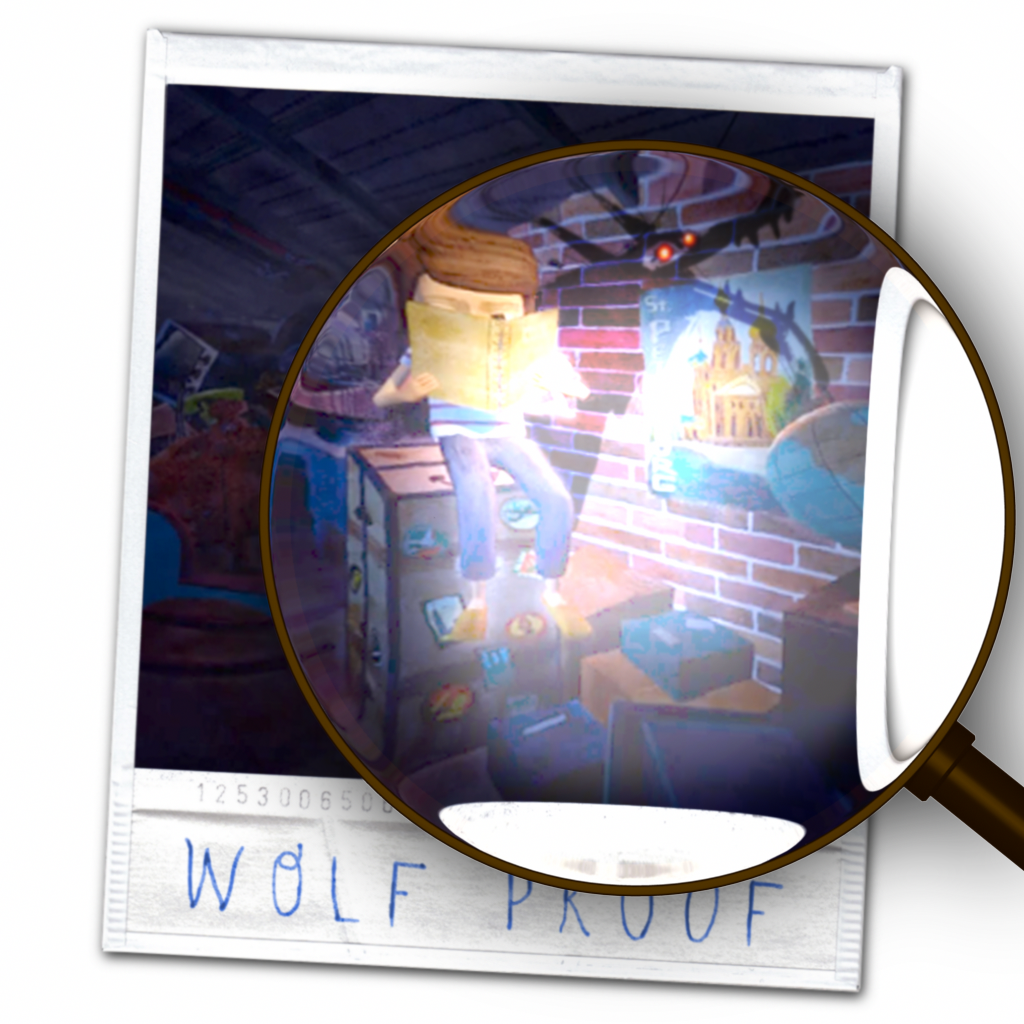
This is important because in Wolves, you’re not just a passive observer, but Lucy’s friend and confidant. Lucy needs your help to find proof that wolves do live in the walls of her home. Her parents don’t believe her; neither does her brother. So she asks you, the participant, to take photos with a Polaroid camera around the attic, looking for evidence. She also asks you to mark a circle and an “X” where the sounds are coming from on a wall. And Lucy hands you a magnifying glass to examine a photo that might have evidence of the wolves.
All of these moments in the VR experience are impressively executed — small interactions to bring the player ever closer to Lucy emotionally. Even more impressively, Lucy responds to my actions when I don’t quite do things to her liking. Lucy scolds me for taking a photo of her instead of the ceiling. She’s annoyed at me when I use too much chalk on the wall. I feel like I’m part of her world as we each hold up an empty mason jar to the wall in the dark; I turn my head slightly and suddenly hear rustling sounds through the glass. And I’m unsettled when I help Mom label her strawberry jam jars. The empty jars shake and rattle behind me without a discernible cause. And as we all know… when the wolves come out of the walls, it’s all over.
And yet, despite her sophistication as a virtual being, Lucy is still a child in this story. So when she gets frustrated at her family and swipes at her drawing (aka me), my perspective changes. There are sudden gaps in my field of view corresponding to her finger trails. Small stripes have appeared in my vision where everything is black and white. And the action keeps going, so I see the next scene partially in black and white and partially in color. The rules of the world here are both consistent and reactive to what both the player and Lucy are doing, a testament to how well-designed the experience is. Fable work hard at properly casting the audience and taking that logic all the way through to its conclusion. And we are, also, literally cast into the work: when the end credits come up, there’s a blank space for the participant to pick up a piece of chalk and sign their name.
Wolves in the Walls is both a technological feat and a narrative achievement. The creators have discovered a way to create a real emotional connection with a virtual character while providing moments of agency during the story. This work hints at an AI future where a virtual being may be able to improvise reactions to actions in real time, perhaps even remembering past interactions, and evolving over time. We’re obviously not at this future quite yet. But in the meantime, I’m entranced by Wolves in the Walls and Lucy’s world and — especially — the role I can play within it. And if I could, I’d give Lucy a big virtual hug right now.
Wolves in the Walls: It’s All Over runs April 26 — May 4 as part of the Tribeca Film Festival’s Immersive Program. Tickets are sold out.
Read director Pete Billington’s behind the scenes essay about the making of Wolves in the Walls.
View all of our Tribeca Immersive 2019 coverage.
NoPro is a labor of love made possible by our generous Patreon backers. Join them today!
In addition to the No Proscenium web site, our podcast, and our newsletters, you can find NoPro on Twitter, Facebook, YouTube, Instagram, in the Facebook community Everything Immersive, and on our Slack forum.
Office facilities provided by Thymele Arts, in Los Angeles, CA.


Discussion